Tag Archive for: Backlighting Repair

What Causes Dashboard Backlight Failure?

What Causes Dashboard Backlight Failure?

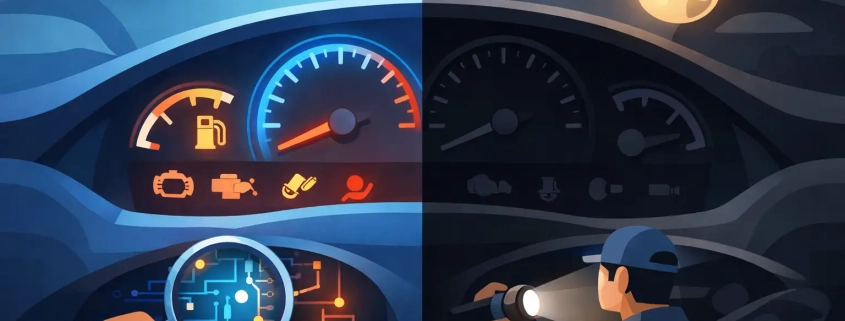
You usually notice it at the worst possible time – on a dark road, in poor weather, or halfway through an early morning commute when the speedometer and fuel gauge suddenly become hard to read. If you are wondering what causes dashboard backlight failure, the answer is rarely as simple as one blown bulb. On modern vehicles, dim or failed dashboard illumination can come from anything between a basic power supply fault and an internal instrument cluster failure.

For drivers and workshops alike, the key point is this: the backlight is only the visible symptom. The real fault may sit in the lighting circuit, the cluster electronics, or the display itself. That is why some dashboards fail gradually, some flicker for weeks, and others go dark without warning.

What causes dashboard backlight failure in modern vehicles?

Older dashboards often relied on replaceable bulbs, so a failed backlight could sometimes be traced to one simple component. From the late 1990s onwards, many vehicles moved towards more integrated instrument clusters using surface-mounted LEDs, onboard voltage regulation and delicate printed circuit boards. That changed the repair process completely.

In practical terms, what causes dashboard backlight failure today usually falls into one of three areas: failed illumination components, electrical supply issues, or internal cluster faults. The challenge is that these faults can look identical from the driver’s seat. A cluster with failing internal solder joints can appear no different to one with a separate dimmer or power feed issue.

This is where proper testing matters. Replacing the entire dashboard unit without confirming the cause can become expensive very quickly, especially when coding, mileage retention and parts availability are involved.

The most common causes of dashboard backlight failure

A failed bulb or LED is still one of the most common reasons for poor illumination, but it is not always the whole story. On some vehicles, one section of the cluster may go dim while the rest stays lit. That can point to individual component failure. On others, the entire backlight system drops out together, which often suggests a broader electrical or internal board fault.

Power supply issues are another frequent cause. Instrument clusters rely on stable voltage. If the supply to the cluster is interrupted by a blown fuse, wiring issue, poor earth or connector problem, the backlighting may stop working altogether or behave intermittently. Intermittent faults are particularly common where heat, vibration and age start to affect connections behind the dash.

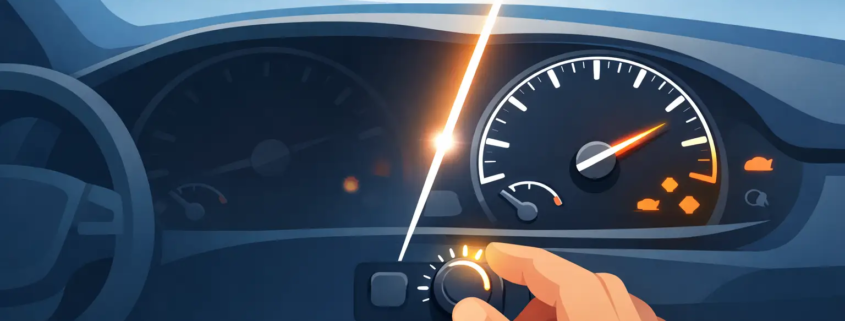
The dimmer circuit can also be responsible. Many drivers assume a dark dash means the cluster itself has failed, when in fact the brightness control circuit is no longer adjusting correctly. That said, if the dimmer appears to work but the cluster remains patchy, flickers, or only comes back when tapped or when the cabin warms up, the fault is more likely inside the unit.

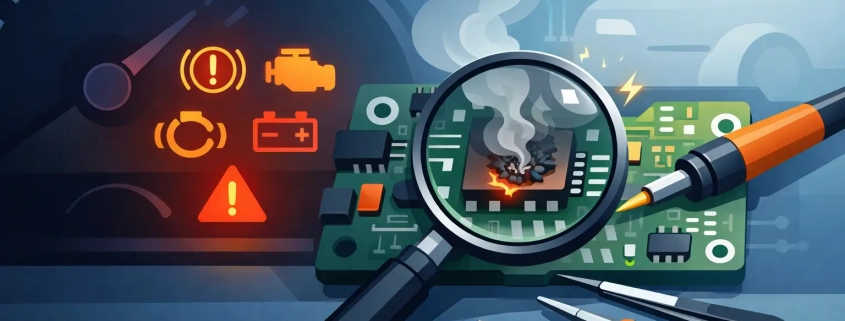
Internal circuit board failure is a major cause on modern instrument clusters. This can include failed resistors, damaged tracks, poor solder joints, degraded LED drivers or faults in the voltage regulation stage. These are not issues that can be solved by swapping a bulb. They require electronic diagnosis and component-level repair.

Why dashboard backlights fail gradually

Not every failure is sudden. In fact, a gradual change often tells you more about the fault than a total blackout does.

If the dashboard becomes dimmer over time, starts flickering, or works on some journeys but not others, that often points to heat-related stress within the cluster. Solder joints can weaken with repeated heating and cooling cycles. LEDs and their driver components can degrade. Connectors can develop resistance. The result is a cluster that still functions, but not reliably.

Vehicles used for frequent short journeys can show these symptoms just as much as high-mileage motorway cars. Age matters as much as mileage. A 15 to 20-year-old cluster may simply be reaching the point where electronic components are no longer operating consistently.

Moisture can also play a part, especially if the vehicle has had previous leaks, windscreen replacement issues or damp within the cabin. Even slight corrosion on connectors or circuit boards can affect backlighting performance long before the rest of the cluster shows obvious faults.

When the problem is not the backlight itself

A dark or unreadable cluster does not always mean the illumination has failed. Sometimes the display is working but the LCD panel, pixel layer or gauge face lighting is no longer visible as intended. This is common on certain makes and models where the display develops pixel loss, poor contrast or complete screen failure.

It is also possible for communication faults in the cluster to affect how the unit powers up. If the cluster has internal processor issues or unstable voltage regulation, the backlight may fail alongside gauge errors, warning light problems or intermittent total shutdown. In those cases, treating it as a simple lighting fault would miss the underlying issue.

That is why symptoms matter. A cluster that is only dark at night may have a different fault from one that also resets mileage displays, loses gauges or flashes warning lamps unexpectedly. The more complete the symptom picture, the easier it is to identify whether the fault is confined to illumination or part of a wider instrument cluster problem.

Can a fuse cause dashboard backlight failure?

Yes, it can, but not always in the way people expect. A blown fuse can cut power to the illumination circuit and leave the dashboard dark. That is one of the first things worth checking because it is quick and simple. However, if a replacement fuse blows again, there is usually another fault behind it.

Repeated fuse failure may indicate a short circuit, damaged wiring or an internal cluster issue drawing incorrect current. In that situation, fitting more fuses does not solve the problem. It only delays proper diagnosis.

Likewise, if the fuse tests fine but the backlight still fails intermittently, the issue is more likely to be connection-related or inside the cluster itself. This is why garages often need to go beyond basic checks and test the unit in a controlled way.

Why replacement is not always the best answer

Main dealer replacement can look like the straightforward option, but with instrument clusters it is often the most expensive route. Many units require coding, adaptation and mileage configuration. On some vehicles, brand new replacements are no longer available, or only supplied at a cost that makes little sense compared with repair.

Repairing the original unit has clear advantages. The vehicle keeps its own cluster, mileage and coding remain with the car, and turnaround is usually much faster than sourcing and programming a replacement. For trade customers, this also reduces workshop delays and avoids introducing second-hand units with unknown history.

It does depend on the extent of the damage. A unit with severe liquid ingress or heavy board damage may not always be economical to save. But for many backlight faults, professional repair is the sensible option because the fault sits in serviceable electronics rather than the whole cluster being beyond use.

Diagnosing what causes dashboard backlight failure properly

The right diagnosis starts with the symptoms, but it should not end there. If the backlight has failed, a proper assessment will typically consider whether the fault affects the whole cluster or one section, whether it is constant or intermittent, and whether any other dashboard functions are failing at the same time.

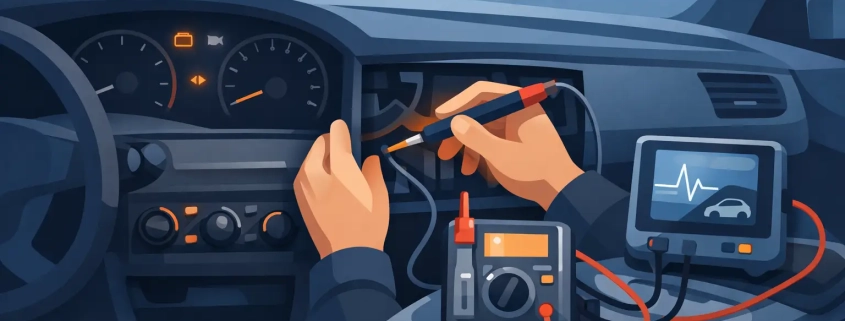
From there, electrical supply checks and specialist bench testing can confirm whether the issue lies outside the cluster or within it. This matters because replacing switches, fuses or dimmer controls without proof can waste time and money. Equally, condemning the cluster too early can mean missing a vehicle-side wiring problem.

For that reason, specialist instrument cluster repair is often the quickest route to a proper answer. A company such as Cartronix can test clusters using dedicated equipment and emulators, identify component-level faults and repair the original unit without dealer replacement costs.

When to get the dashboard repaired

If the dashboard backlight is flickering, partially dim, completely out, or failing alongside display and gauge issues, it is worth acting before the fault worsens. Many backlight problems start intermittently and become permanent later. Waiting can leave the vehicle harder to use safely at night and may lead to further strain on already failing components.

For independent garages and workshops, early repair also helps avoid repeat visits and uncertain fault tracing. If a known cluster fault pattern exists for a particular make or model, sending the unit to a specialist can often be faster than spending hours chasing an intermittent issue in the vehicle.

The practical takeaway is simple. Dashboard backlight failure is usually repairable, but only if the real cause is identified correctly. The sooner the fault is tested, the better the chance of a fast, cost-effective repair that keeps the original cluster in service.

A dim dashboard can look like a small annoyance until you cannot read the speedo on an unlit road. Once that starts happening, the best next step is not guesswork – it is a proper diagnosis.

Dim Speedometer Display Fix guide image

Dim Speedometer Display Fix: What Works

You usually notice it at the worst possible time – on a dark winter commute, in rain, or halfway through an early morning start when the dash is barely readable. A dim speedometer display fix is not always as simple as turning the brightness up. In many cases, a fading or near-black instrument display points to a developing fault inside the cluster itself.

That matters for more than convenience. If you cannot clearly read your speed, warning lights, fuel level or driver information, the vehicle becomes harder to use safely and reliably. For some owners the problem comes and goes. For garages, it often arrives as a vague complaint – “dashboard too dark”, “mileage display faded” or “screen almost gone when warm”. The underlying causes are usually more specific.

When a dim speedometer display fix is simple

The first step is separating a settings issue from a hardware fault. Many modern vehicles have dashboard illumination controls that can be turned down accidentally, especially if the dimmer wheel sits close to the lighting switch. If the whole dash has gone faint at once, check that before assuming the cluster has failed.

Ambient light and headlamp settings can also affect what you see. Some displays reduce brightness automatically when side lights or dipped beams are on. Tinted glasses, poor battery voltage after a cold start and even a dirty lens over the display can make a marginal screen look worse than it is.

There is also the possibility of a wider electrical issue. Low system voltage, poor earthing or a charging fault can affect instrument illumination. If the vehicle has other signs such as slow cranking, flickering interior lights or repeated battery warnings, the cluster may not be the only problem. That said, if the rest of the vehicle is behaving normally and only the speedometer display is weak, intermittent or unreadable, the fault is often inside the instrument panel.

The common causes of a dim speedometer display fix

A modern instrument cluster is an electronic unit, not just a set of bulbs and dials. Depending on the vehicle, the speedometer display may rely on LCD backlighting, soldered components, ribbon connections, voltage regulation circuits or dedicated illumination drivers. When any of those begin to fail, brightness drops, pixels fade or the screen cuts out altogether.

One common issue is ageing backlighting. Over time, the light source behind the display can weaken. On some clusters this happens gradually, so drivers adapt without realising how bad it has become until the display is almost unreadable at night.

Another frequent cause is internal circuit board failure. Heat cycles, vibration and age can stress solder joints and electronic components. That is why some dim displays improve briefly after the vehicle warms up, then fail again, or only work after tapping the dashboard. Those symptoms are rarely solved by replacing a fuse.

Ribbon cable and screen connection faults are also well known on certain makes and models. If sections of the display are dimmer than others, missing lines, losing pixels or fading from one side, the connection between the display and board may be deteriorating.

Some vehicles are also prone to illumination faults caused by failed internal voltage regulators. In those cases the screen may dim alongside gauge issues, warning light problems or a complete loss of the cluster. It depends on the design of the unit and the stage of failure.

Signs the cluster itself needs repair

A proper dim speedometer display fix often comes down to recognising patterns. If brightness adjustment makes little or no difference, that is a strong clue. If the display is worse when cold, worse when hot, flickers during driving or disappears intermittently, that points even more strongly to an internal fault.

The same applies if only one part of the cluster is affected. For example, the mileage screen may be dim while the gauge needles still illuminate normally, or the central information display may fade while warning lamps remain visible. That usually indicates a component-level issue inside the unit rather than a vehicle-wide electrical fault.

Garages will know the value of checking powers, grounds and communication first. For private owners, the practical point is simpler: if the dashboard dimmer is set correctly and the rest of the vehicle electrics are stable, the instrument cluster is the most likely source.

Why replacement is not always the smart answer

Main dealer replacement is often the most expensive route for a dim or failed cluster display. On many vehicles the replacement unit then needs coding, configuration and mileage handling. In some cases new clusters are no longer readily available, especially on older models from the late 1990s and early 2000s.

Repair is often the better option because the original unit stays with the vehicle. That means the coding, specification and mileage data can be retained, avoiding unnecessary complications. It is also typically faster and more economical than replacing the full instrument pack for what may be a single internal fault.

This matters for trade customers as much as private owners. If a garage can send the original cluster for specialist repair rather than tie up workshop time chasing an intermittent display issue, the job usually moves faster and with less cost to the customer.

What a proper repair should involve

A reliable fix is not guesswork. The cluster should be tested, the fault identified and the failed components repaired using the right equipment. That may include bench testing, emulator-based diagnostics and component-level work on the circuit board and display section.

The exact repair depends on the unit. Some need display refurbishment, others require backlighting repair, power supply work or restoration of failed connections. There is no single universal fix across all makes. Audi clusters, Ford clusters, Fiat dashboards and Alfa Romeo units can all present dim display faults in different ways.

That is why generic advice online can only take you so far. Swapping bulbs on an older analogue dashboard is one thing. Attempting board-level repair on a coded modern cluster without proper testing is another. Done badly, it can turn a repairable unit into a more expensive problem.

DIY checks versus specialist repair

There is nothing wrong with doing a few sensible checks first. Confirm the dimmer setting, inspect fuses if the handbook points to one, and pay attention to whether other electrical systems are affected. If the battery is weak or the alternator is suspect, deal with that too.

Beyond that, caution is wise. Removing a cluster on modern vehicles can involve trim removal, steering column adjustment and care around sensitive connectors. Opening the cluster itself risks dust contamination, damaged needles, cracked screens and circuit board harm if the job is not done properly.

For trade professionals, the decision is usually commercial. If the workshop does not specialise in instrument electronics, outsourcing the repair is often the more efficient route. For owners, it is about avoiding trial-and-error parts replacement when the fault sits inside a repairable original unit.

Turnaround, warranty and keeping the vehicle original

When your speedometer display is too dim to read, downtime matters. A specialist repair service is usually chosen for speed as much as cost. Same-day or next-working-day turnaround can make a real difference for daily drivers, vans and motorhomes, and for garages trying to keep jobs moving.

Retaining the original cluster is another major benefit. You are not introducing a used unknown unit from another vehicle, and you are not paying for a complete replacement where only one section has failed. Preserving the original unit helps avoid issues with coding and keeps the vehicle’s existing data where it belongs.

Warranty also matters. A proper lifetime warranty tied to vehicle ownership gives both retail and trade customers confidence that the fix is meant to last, not just get the display through the next MOT or sale.

When to book a dim speedometer display fix

If the display is becoming difficult to read, do not wait for total failure. Intermittent dimness often gets worse, and complete blackout can follow with little warning. Booking the repair while the fault is still present but before the unit fails completely can make diagnosis more straightforward.

This is particularly relevant where the cluster also controls warning messages, trip data, gear indication or driver information functions. What starts as a dim screen can turn into a larger usability issue very quickly.

For drivers and workshops across the UK, specialist instrument repair is usually the practical answer. Cartronix deals with dim displays, failed backlighting and cluster faults across a wide range of vehicles from 1996 onwards, offering a faster and more cost-effective alternative to dealer replacement.

If your dashboard is fading, flickering or going unreadable, treat it as an electronic fault rather than a cosmetic annoyance. The right repair can restore clear visibility, keep the original unit in the car and get you back on the road without the cost of replacing the whole cluster.