

Car Dashboard Pixel Repair Explained
Car Dashboard Pixel Repair: quick repair guidance
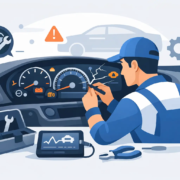
Car Dashboard Pixel Repair Explained covers a common dashboard and instrument cluster problem. Cartronix checks the symptoms, repairs the original electronics where possible, and tests the result before return.
First, note the fault clearly. Next, check when it appears. Then, book the repair with the vehicle details. This gives the workshop useful information before the unit arrives.
Quick checks before booking
- Record the vehicle make, model, and year.
- Write down the exact dashboard warning or display fault.
- Check whether the issue appears every time you start the vehicle.
- Note any dead gauges, dim screens, pixel loss, or flashing lights.
- Tell the team if another garage opened the unit.
- Take a photo of the fault if the display still works.
- Keep the original unit with the vehicle whenever possible.
- Pack the cluster securely before posting it.
- Include your name, phone number, return address, and fault notes.
- Use tracked postage for the repair parcel.
- Contact Cartronix first if the vehicle has water damage.
- Ask for advice if the fault only appears when the vehicle warms up.
How Cartronix handles the repair
Firstly, technicians inspect the unit and confirm the reported fault. Secondly, they repair the failed components and check the circuit carefully. Finally, they test the unit before it leaves the workshop.
This approach helps drivers avoid unnecessary dealer replacement costs. It also helps garages reduce downtime, protect the original mileage data, and give customers a clearer repair option.
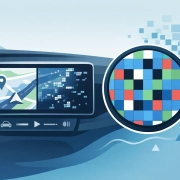
When parts of your dashboard display start disappearing, the problem usually begins as an annoyance and quickly becomes a real usability issue. Missing radio text, broken mileage digits, unreadable warning messages or faded trip data are classic signs that car dashboard pixel repair is needed – especially on vehicles where the instrument cluster or information display is known to fail with age.
This is one of those faults that often gets worse rather than staying put. A few dead lines today can become a display you cannot read at all in a few weeks or months. For many drivers and workshops, the first assumption is that the whole cluster or display unit needs replacing. In practice, that is often the most expensive route and not always the best one.
What causes dashboard pixel failure?
Pixel loss is usually linked to the screen itself, the ribbon connection between the display and the circuit board, or internal component failure within the instrument cluster. Heat cycles, vibration and age all play a part. Over time, the connection that carries data to the display can weaken, which is why text becomes patchy, lines go missing or sections fade in and out.
On some vehicles, the fault is intermittent at first. The display may look clearer on a cold morning and worse once the interior has warmed up. On others, the failure is permanent, with blocks of missing information or a screen that is dim even though the rest of the dashboard still works.
That distinction matters because not every pixel issue is just a screen issue. A proper diagnosis needs to confirm whether the failure sits in the LCD, the cluster electronics, the power supply to the display or a wider communication fault. Replacing parts too early can waste money and still leave the original problem unresolved.
When car dashboard pixel repair is the right option
If the display is unreadable but the original cluster is otherwise functioning, repair is usually the most sensible route. It allows the existing unit to be retained, which matters because the original dashboard often holds mileage data, vehicle coding and configuration information that you do not want to disturb unless absolutely necessary.
For UK motorists, that can mean avoiding the cost and delay of main dealer replacement. For garages, it means sending a known faulty unit to a specialist rather than fitting a replacement cluster and then dealing with coding, adaptation or compatibility issues afterwards. On many 1996 onwards vehicles, keeping the original unit in service is simply the cleaner solution.
There are cases where replacement may still be necessary. Severe water damage, extensive PCB failure or previous poor repair work can make a unit uneconomical. But pixel faults on their own are frequently repairable, and that is why specialist testing comes first.
Why replacement is often the costly option
A brand new instrument cluster or information display can look like the easy answer until the full picture is clear. The part itself may be expensive, dealer programming may be required, availability can be limited, and the vehicle may be off the road longer than expected.
There is also the originality issue. Once you replace a cluster, you may be dealing with coding changes, mileage transfer procedures or restrictions on what can and cannot be programmed into a new unit. That becomes even more awkward on certain prestige models, commercial vehicles and motorhomes where lead times and costs can escalate quickly.
Repair avoids much of that. The goal is not to substitute the vehicle’s electronics with a different unit. It is to restore the original one so it works as it should, with the correct data and configuration already in place.
How a specialist approaches car dashboard pixel repair
A proper repair starts with testing, not guesswork. The unit needs to be assessed to confirm the exact source of the display fault and to rule out related failures in the cluster. This is where specialist bench testing and emulator-based diagnostics make a difference. They allow the cluster to be checked outside the vehicle under controlled conditions, which helps identify whether the issue is isolated to the display or part of a wider internal defect.
Once confirmed, the repair may involve replacing failed display elements, renewing ribbon connections, rectifying dry joints or carrying out circuit-level work within the dashboard assembly. The exact method depends on the make, model, year and fault pattern. There is no one-size-fits-all fix, and anyone promising one probably is not diagnosing deeply enough.
The benefit of specialist repair is precision. Instead of trial fitting used parts or replacing assemblies unnecessarily, the original unit is repaired around the actual failure point. That saves time, keeps coding intact and reduces the chance of repeat problems caused by second-hand replacements of unknown quality.
The signs you should not ignore
Some pixel faults are obvious. Others are subtle enough that drivers put up with them for months. If message centre text is incomplete, the clock or temperature display is missing segments, warning messages cannot be read properly, or the mileage display is fading, the unit should be checked sooner rather than later.
A dim display is also worth attention. It may look like a backlighting issue, but on some dashboards the root cause is tied to the screen or cluster electronics rather than the bulbs or illumination circuit. Likewise, if pressure on the dashboard temporarily changes the display, that can point to an internal connection fault rather than a software issue.
For garages, customer descriptions can be inconsistent. A driver may report that the dashboard is “going blank” when what they really mean is severe pixel dropout. Asking whether numbers are partially visible, whether the fault changes with temperature and whether other gauges or warning lights are affected can help narrow the fault before removal.
What vehicle owners and workshops usually want to know
The first question is usually about downtime. If a vehicle is needed daily, speed matters. That is why fast specialist turnaround is such a practical advantage. A same-day or next-working-day repair service can make the difference between a manageable inconvenience and a major disruption.
The second question is about mileage and coding. With repair, those original values and settings remain with the unit because the original cluster is being restored, not swapped out. That is a major reason repair is preferred over replacement wherever possible.
The third is reliability. A pixel repair should not be treated as a temporary patch. Done properly, it addresses the underlying hardware fault and should come with warranty protection that gives both motorists and trade customers confidence in the result.
Postal repair or while-you-wait?
It depends on how the vehicle is used and who is arranging the work. For many owners and independent garages, postal repair is the simplest route. The cluster is removed, securely sent for testing and repair, then returned ready to refit. This works particularly well for vehicles that can be left off the road briefly or where the unit has already been removed in the workshop.
While-you-wait appointments suit customers who want the fault resolved as quickly as possible and prefer direct workshop handling. This can be especially useful where diagnosis is needed on the vehicle as well as on the bench, or where trade customers want a fast answer for a booked-in job.
Neither route is automatically better. The right choice comes down to logistics, urgency and whether the cluster has already been removed.
Why model-specific experience matters
Dashboard display faults are rarely generic across all vehicles. Audi, Aston Martin, Fiat, Ford and Alfa Romeo clusters can all suffer display-related issues, but the failure modes, repair methods and test requirements differ. Even within one manufacturer, a fault on one model year may not match the next.
That is why catalogue-style repair coverage by make, model, year and fault type is useful. It gives customers and workshops a clearer path to the correct service and avoids vague descriptions that lead to the wrong job being booked.
For a specialist such as Cartronix, that model-specific approach is central to getting repairs turned around quickly and accurately. It is also what gives trade customers confidence that the unit is being handled by people who see these faults regularly rather than occasionally.
Choosing repair before the display fails completely
There is a temptation to wait until the screen becomes unreadable. In reality, earlier repair is often the better decision. Once the display is almost gone, warning messages, service information and mileage readings can become difficult or impossible to verify. That creates avoidable hassle for the driver and can complicate diagnosis of unrelated faults.
Acting early also reduces the risk of chasing the wrong answer. A patchy display can be misread as a battery issue, a lighting issue or a complete cluster failure when the real problem is a repairable internal fault. Catch it before it gets worse, and the job is usually more straightforward for everyone involved.
If your display is losing lines, fading in sections or becoming hard to read, the sensible next step is not to price up a replacement dashboard. It is to have the original unit properly tested and repaired by a specialist who can restore the display, retain the vehicle’s data and get you back on the road without dealer replacement costs.










Trackbacks & Pingbacks
[…] fade, lose sections of digits, show vertical lines or become unreadable in certain temperatures. Pixel loss causes real frustration because the vehicle may be working perfectly, yet messages, mileage information, radio details or […]
Comments are closed.