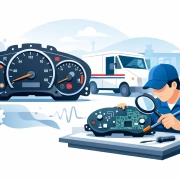

Dashboard Repair Services That Save Time
When a dashboard starts flashing, fading or stops working altogether, the problem is rarely just an annoyance. A failed speedometer, dead LCD, warning light fault or full instrument cluster blackout can make the vehicle harder to use, harder to trust and, in some cases, unsuitable to drive. That is why dashboard repair services matter – not as a cosmetic fix, but as a practical alternative to expensive dealer replacement.
For most drivers and workshops, the first surprise is cost. Main dealers often default to replacing the entire cluster, which can be expensive, slow and unnecessary. In many cases, the original unit can be repaired properly, tested and returned quickly, with the mileage and coding preserved. That changes the decision completely. Instead of paying for a new part and the programming that comes with it, the focus shifts to fixing the actual fault.
What dashboard repair services actually cover
The term gets used broadly, but proper dashboard repair services are usually focused on the instrument cluster and its electronics. That includes speedometer faults, rev counter issues, intermittent gauges, failed warning lamps, dim backlighting, dead sections of the display, pixel loss and complete cluster failure. On newer vehicles, communication faults can also be part of the problem, especially where the dash is no longer reading correctly from the vehicle network.
Some faults are obvious from the start. A display may be unreadable in daylight, the fuel gauge may stick, or the needles may behave erratically. Others are more intermittent. The cluster may fail when cold, reset itself after a few minutes, or lose functions only when the vehicle has been running for a while. Those jobs need more than guesswork. They need proper testing and fault confirmation before any repair starts.
This is where specialist electronics repair differs from general workshop diagnosis. A mechanical garage may confirm that the cluster is at fault, but repairing it at board level is a separate discipline. The value is not simply in fitting parts. It is in knowing where these units fail, how to test them accurately and how to return the original dashboard working as it should.
Why repair is often better than replacement
Replacement sounds simple until the practical details arrive. New clusters are commonly expensive, not always in stock and may require coding, mileage alignment or security matching to the vehicle. On some models, availability is also a problem, particularly as cars age and genuine parts become harder to source.
Repair avoids much of that. Because the original unit stays with the vehicle, there is no need to replace it with a blank or mismatched cluster. Mileage data and coding can remain intact, which matters to owners and to the trade. It also avoids the awkward situation where a replacement part solves one issue but introduces another through compatibility or configuration differences.
There is a trade-off, of course. Not every unit is repairable, and not every fault sits inside the cluster itself. Power supply issues, wiring faults and vehicle-side communication problems can mimic dashboard failure. A good repair service should be honest about that. If the fault is elsewhere, replacing or repairing the cluster will not fix the car. Proper diagnosis comes first.
Where the cluster is confirmed as the cause, repair is usually the faster and more economical route. For vehicle owners, that means less downtime and no dealer replacement costs. For independent garages and dealerships, it means the job can be completed without tying up a bay for days waiting on parts.
Common faults seen in modern instrument clusters
Modern dashboards from roughly 1996 onwards are far more electronic than many drivers realise. The cluster is not just a set of needles anymore. It is a control and information unit, often carrying warning systems, trip data, immobiliser-related functions and display communication. That added complexity is exactly why certain failures keep appearing across different makes and models.
Pixel loss is one of the most familiar. Characters disappear, parts of the screen fade or the display becomes unreadable when warm. Backlighting faults are another regular issue, especially when the warning icons or LCD become too dim to read at night. Gauge problems are equally common, with speedometers, fuel gauges or temperature needles giving false readings or dropping out altogether.
Then there are full failures. The cluster may go dead, reboot randomly or stop communicating with the vehicle. On some cars this can trigger additional symptoms, from immobiliser concerns to warning lights appearing for no clear reason. These faults can look dramatic, but they are often repairable when handled by a specialist with the right test equipment.
How a specialist dashboard repair service works
A proper process is straightforward. First, the fault is identified as accurately as possible based on the vehicle details, symptoms and known failure patterns. Then the cluster is removed and sent in, or booked in for a workshop appointment. Once received, the unit is tested, repaired at component level where needed and checked again before return.
The important part is the testing. Specialist services use dedicated bench setups and emulators to reproduce faults and confirm that the unit performs correctly outside the vehicle. That matters because many dashboard issues are intermittent. If a unit is not properly stress-tested, it may appear fixed on the bench but fail again after refitting.
Turnaround also matters. Most customers are not looking for a long engineering project. They want the vehicle back in service. That is why same-day or next-working-day repair is such a strong advantage when the fault is known and the unit is repairable. Postal coverage helps drivers nationwide, while-you-wait workshop appointments suit customers who need the quickest possible resolution.
Dashboard repair services for motorists and trade
Private owners and trade customers tend to want the same outcome – a reliable repair without unnecessary replacement – but they approach the problem differently.
For motorists, the main concerns are usually cost, speed and trust. They want to know the fault has been seen before, the repair will hold, and the car will not come back with mileage or coding issues. A clear warranty helps here because it removes uncertainty and gives the customer confidence that the job has been done properly.
For garages and dealerships, the focus is more operational. They need dependable diagnosis, fast turnaround and a specialist partner who can handle work outside normal mechanical scope. Sending clusters away for repair often makes better business sense than trying to source replacement units or spending workshop time chasing faults that need electronics expertise.
That is why service structure matters. A business such as Cartronix is built around that specialist role – repairing original instrument clusters quickly, covering customers nationally by post and supporting trade accounts with practical turnaround expectations.
When to book dashboard repair services
If the fault is intermittent, many people wait too long. They assume a flickering display or occasional gauge drop-out can be ignored until it becomes permanent. Sometimes that works for a while, but electronic faults usually progress rather than disappear. Heat cycles, vibration and failing internal components tend to make symptoms more frequent over time.
The best time to act is when the pattern becomes noticeable. If the display fades every morning, if the warning lights are too dim to read, or if the speedometer starts behaving erratically, get the cluster checked before it fails completely. Early action can reduce inconvenience and helps avoid the wider confusion that comes when multiple dashboard functions stop at once.
It also helps to describe the fault clearly. Does it happen from cold, after driving, only in wet weather, or only when lights are switched on? Those details can make diagnosis quicker and more accurate.
What to look for in a repair provider
Not all repair services are equal. The right provider should understand model-specific failures, test units properly and explain the likely outcome without overpromising. Fast turnaround is useful, but only if the repair is done properly. Equally, a low headline price means little if the unit comes back with the same fault.
Look for a service that repairs original units rather than pushing replacement by default, offers clear pricing including VAT, and provides a meaningful warranty. Experience across a wide range of makes is valuable because dashboard faults are rarely identical from one manufacturer to another. Audi problems are not the same as Ford problems, and motorhome clusters can present different challenges again.
A lifetime warranty tied to vehicle ownership is also a strong sign of confidence. It tells the customer that the repair is expected to last, not just get through the next few weeks.
When your dashboard stops doing the one job it absolutely has to do – giving you clear, reliable information – the right repair is usually quicker and simpler than most people expect. The key is choosing a specialist who can diagnose the fault properly, repair the original unit and get the vehicle back on the road without turning a repairable problem into an expensive replacement.