
Tag Archive for: Warning Lights

warning light backlight repair

Warning Light Backlight Repair: What Fails and Why

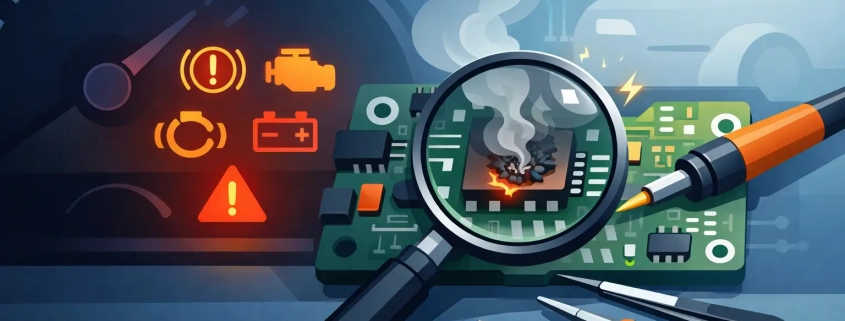
A warning symbol can still be working electrically while remaining almost impossible to see at night. That is where warning light backlight repair becomes necessary. If one area of the instrument cluster is dim, several warning lamps have lost illumination, or the dashboard is completely dark with the ignition on, the fault may be inside the cluster rather than with the vehicle’s warning system itself.

For drivers, this is more than an annoyance. A poorly illuminated dashboard can hide important alerts and make the vehicle harder to use safely after dark. For garages, it can create a difficult diagnosis: the vehicle may report no stored fault codes, yet the customer can clearly see that the cluster is not displaying correctly.

What does warning light backlight repair involve?

Most modern instrument clusters use small surface-mounted LEDs and electronic driver circuits to illuminate warning symbols, gauges and display areas. Unlike older dashboards with replaceable bulbs, manufacturers solder these components directly to the circuit board. Accessing them normally requires careful removal of the cluster, dismantling the housing and testing the electronics at component level.

Warning light backlight repair focuses on restoring the illumination without replacing the complete instrument cluster. Depending on the fault, this can mean replacing failed LEDs, repairing damaged tracks or solder joints, correcting a fault in the illumination driver circuit, or addressing heat damage on the circuit board.

The objective is simple: return the original unit with the correct brightness and operation, while retaining the vehicle’s existing mileage, configuration and coding. This is often preferable to fitting a replacement dashboard that may need programming, mileage correction or security matching before it will work correctly.

Signs the backlight fault is inside the cluster

A dim dashboard does not automatically mean the instrument cluster has failed. Start with the obvious checks: dashboard dimmer settings, relevant fuses, battery condition and charging voltage. If the vehicle has recently had electrical work, water ingress or a flat battery, these details can also help pinpoint the cause.

However, a cluster fault becomes more likely when the problem affects only one section of the display or warning lights. Typical symptoms include a warning symbol that disappears at night or a dark patch across one gauge. Some lights also react to bumps or fade as the cabin warms.

Some vehicles develop combined faults. The warning lights may be dim, the LCD may lose pixels, needles may behave erratically, or the cluster may intermittently fail to power up. These symptoms can share a cause, particularly where ageing solder joints, failed components or heat-related damage affect the circuit board.

Backlight failure is not the same as a warning light fault

Drivers must distinguish between an active warning lamp and a symbol with failed illumination. For example, a fault elsewhere on the vehicle may trigger the engine management warning. A failed backlight or LED can hide the symbol even when the cluster receives a command to show it.

The same applies if every warning lamp appears permanently lit. That may be a communication, power supply or internal cluster issue rather than a collection of separate vehicle faults. Proper diagnosis prevents unnecessary replacement of sensors, control units or the complete dashboard.

Common causes of dim or failed warning light illumination

Heat is one of the main causes. Instrument clusters sit behind the dashboard, where they experience years of temperature changes. Normal vehicle use repeatedly heats and cools the LEDs, driver chips and solder joints. Over time, an LED can fail, a solder joint can crack, or a component can become unstable once warm.

Voltage issues can also contribute. A weak battery, poor earth connection, alternator fault or jump-starting error can put stress on sensitive dashboard electronics. The cluster may continue working at first, but extreme heat can push weak components beyond their limit.

Water ingress is another concern. Condensation or a leaking windscreen can affect connectors and circuit boards, while a drink spill around the dashboard may cause damage that only becomes apparent later. In these cases, the repair must address corrosion and contamination as well as the failed lighting components.

Finally, previous repair attempts can complicate the job. Incorrect LEDs, excessive heat during soldering, lifted circuit tracks and poorly matched replacement parts can produce uneven illumination or create additional faults. Modern clusters are repairable, but they need the right equipment and experience.

Why replacing the whole cluster is not always the answer

A main dealer replacement may suit a unit with severe physical damage or unavailable repair parts. But for a lighting fault, replacing an entire instrument cluster can be disproportionate. The replacement part may be costly, it may need ordering, and the vehicle can require coding and mileage programming before it is usable.

There is also the question of originality. The instrument cluster carries part of the vehicle’s history and often connects to its electronic security systems. Keeping the original unit avoids unnecessary complications and helps preserve the vehicle exactly as it is.

Specialist repair usually costs less and takes less time when the problem affects only the cluster electronics. At Cartronix, technicians test the original unit with specialist equipment and emulators where required. They repair it at component level and check it before return. This approach keeps the original mileage and coding instead of transferring the problem to a replacement unit.

What warning light backlight repair should include

The quality of the diagnosis matters as much as the repair itself. A dashboard can look correct on the bench yet fail in the vehicle when testing misses a power, communication or thermal issue. Equally, replacing one failed LED without checking the surrounding circuit can lead to a repeat fault.

A professional warning light backlight repair should begin with confirmation of the reported issue. Technicians inspect the unit for previous work, liquid damage and overheating. They then test the relevant illumination circuits instead of assuming that every dark area has the same cause.

Technicians replace failed components with suitable parts and check the affected area for consistent brightness. Finally, the technician function-tests the cluster before return. Where a unit has related faults, such as pixel loss, gauge issues or intermittent power-up, it is sensible to identify these at the same time. Repairing the cluster once is generally better than removing it again a few weeks later.

Postal repair or while-you-wait appointment?

The best option depends on the vehicle and the customer’s required turnaround. A postal repair suits customers and garages anywhere in the UK. It works best when a trained person can remove the cluster safely and the customer can keep the vehicle off the road during the repair. It also gives workshops a straightforward way to send specialist electronic work out without losing control of the customer job.

A while-you-wait appointment can suit local customers who need to minimise downtime. For suitable bookings, the team removes, repairs and refits the cluster during the visit. Before removing any cluster, check whether the vehicle needs the unit connected for immobiliser, mileage or warning-system functions, and avoid driving the vehicle with key dashboard information unavailable.

Questions to ask before booking a repair

Give the repairer as much detail as possible. The vehicle make, model, year, registration and exact symptom all help. It is useful to explain whether the fault is permanent or intermittent, whether it changes with the dimmer control, and whether it began after a flat battery, jump start, water leak or other electrical issue.

For trade customers, include any diagnostic findings, known fault codes and whether communication with the instrument cluster is present. This does not replace specialist testing, but it saves time and helps separate a cluster fault from a vehicle-side wiring or control module issue.

Avoid services that offer only a quick bulb change. On many 1996-onwards vehicles, there is no conventional bulb to replace. The work is electronic repair, and the result depends on correct component selection, controlled soldering and thorough testing.

How to protect the cluster after refitting

If poor charging voltage, water ingress or a weak earth caused the failure, correct that underlying issue. Otherwise, the same conditions can damage the repaired cluster again. A battery and charging-system check is a sensible precaution after any dashboard electrical fault.

Refit the cluster carefully. Handle trim clips, connectors and screws correctly. Do not press or force the display lens or needle faces. Once installed, confirm the warning lamp self-test, illumination level, gauges, LCD functions and any steering-wheel display controls before handing the vehicle back.

A dim warning lamp is easy to ignore until it masks something the driver needs to see. Repairing the original cluster promptly restores clear night-time visibility, avoids unnecessary replacement costs and keeps the vehicle’s dashboard working as it should.
Dashboard Warning Lights Not Working guide image

Dashboard Warning Lights Not Working?

Dashboard Warning Lights Not Working: quick repair guidance

Dashboard Warning Lights Not Working? covers a common dashboard and instrument cluster problem. Cartronix checks the symptoms, repairs the original electronics where possible, and tests the result before return.

First, note the fault clearly. Next, check when it appears. Then, book the repair with the vehicle details. This gives the workshop useful information before the unit arrives.

Quick checks before booking

  • Record the vehicle make, model, and year.
  • Write down the exact dashboard warning or display fault.
  • Check whether the issue appears every time you start the vehicle.
  • Note any dead gauges, dim screens, pixel loss, or flashing lights.
  • Tell the team if another garage opened the unit.
  • Take a photo of the fault if the display still works.
  • Keep the original unit with the vehicle whenever possible.
  • Pack the cluster securely before posting it.
  • Include your name, phone number, return address, and fault notes.
  • Use tracked postage for the repair parcel.
  • Contact Cartronix first if the vehicle has water damage.
  • Ask for advice if the fault only appears when the vehicle warms up.

How Cartronix handles the repair

Firstly, technicians inspect the unit and confirm the reported fault. Secondly, they repair the failed components and check the circuit carefully. Finally, they test the unit before it leaves the workshop.

This approach helps drivers avoid unnecessary dealer replacement costs. It also helps garages reduce downtime, protect the original mileage data, and give customers a clearer repair option.

You turn the key, the dash wakes up, and something is missing. The battery light stays off. Engine management warning may not show. ABS or airbag lamps may skip the usual self-check. When dashboard warning lights not working becomes the fault, it is more than an annoyance – it can leave you without the basic alerts your vehicle relies on to flag serious problems.

In some cases, the issue is simple. A fuse may have failed, the battery voltage may be low, or a recent electrical job may have disturbed a connection. In many modern vehicles, though, failed warning lamps point to an instrument cluster fault rather than a problem with the bulbs themselves. That matters, because replacing the whole dashboard unit through a dealer is often the most expensive route and usually unnecessary.

What should happen when you start the car?

On most vehicles from the mid-1990s onwards, the instrument cluster runs a self-test when the ignition is switched on. A group of warning lights should illuminate briefly, then switch off once the system confirms everything is working as expected. That start-up sequence is not cosmetic. It tells you the cluster can display faults if and when they occur.

If none of the expected lights appear, or only some of them work, the car may still start and drive normally. That can create a false sense of security. A missing oil pressure light, charging light or airbag lamp means you may not be warned when a genuine fault develops.

Common reasons dashboard warning lights are not working

The first possibility is power supply. A blown fuse, weak battery or poor earth can stop the cluster from powering up correctly. Sometimes the dashboard may still partially function, with gauges or backlighting working while warning symbols do not. Partial failure like this often points to an internal fault rather than a complete loss of supply.

The second issue is failed illumination components inside the cluster. On older dashboards, that may mean individual bulbs. On newer units, surface-mounted LEDs or internal circuit board faults are more common. If one symbol has stopped working, the fault may be localised. If several lights have failed together, the problem is often deeper within the cluster electronics.

There is also the question of communication. Modern instrument clusters do not work in isolation. They receive data from engine control units, ABS modules, body control modules and other systems over the vehicle network. If the cluster loses communication or develops a processing fault, the warning lights may not behave normally even though the underlying systems are fine.

Previous repair work can be a factor too. A used replacement cluster, poor soldering, coding issues or tampering after a mileage correction attempt can all lead to warning lamp faults. We see this regularly on modern dashboards where the original unit was repairable, but a second-hand replacement created extra problems.

When dashboard warning lights not working points to cluster failure

If the warning lights have stopped working alongside other symptoms, the instrument cluster itself is a strong suspect. Typical signs include intermittent gauges, flickering displays, dead LCD sections, random resets, non-working needles or a dash that comes and goes with temperature changes.

This is common on a wide range of cars, vans and motorhomes built from 1996 onwards. Dry joints, failed voltage regulators, damaged tracks and internal component failure can all affect how warning lamps operate. Some units fail gradually. Others work one day and appear dead the next.

It depends on the vehicle. On some models, the cluster stores key vehicle information and must be retained wherever possible. On others, replacement is technically possible but still brings added cost for coding, configuration and mileage alignment. Repairing the original unit is usually the cleaner option because it keeps the car’s existing data intact.

Checks worth doing before booking a repair

Before assuming the dashboard has failed, there are a few sensible checks. Start with the basics: battery condition, relevant fuses and whether the cluster powers up at all. If the vehicle has recently had battery work, stereo installation, water ingress or other electrical repairs, mention that when the fault is diagnosed.

It is also worth noting exactly which lights are missing. If every warning lamp fails to appear on ignition, that suggests one type of problem. If only the airbag light or engine management light is missing, that suggests another. Accurate symptom reporting helps narrow down whether the fault sits in the cluster, the wiring or another control unit.

A scan tool can help, but it does not always give the full answer. Fault codes may show communication issues, supply voltage errors or module complaints, yet still not confirm whether the cluster electronics are at fault. That is where specialist bench testing becomes useful. A proper test setup can power and emulate the unit outside the vehicle to confirm what has actually failed.

Why dealer replacement is often the wrong answer

Main dealers commonly quote for complete replacement when dashboard warning lights are not working. From their side, that is understandable. Replacement fits the standard process. For the vehicle owner or workshop, though, it can be an expensive route with longer downtime and no guarantee that a new unit is the only answer.

A replacement cluster may need coding to the vehicle, adaptation to immobiliser systems and mileage programming where permitted. In some cases, new units are no longer available, and used units bring their own risks. Incorrect coding, mismatched specifications and inherited faults are all common problems.

Repair is often faster and more economical because the original unit stays with the vehicle’s identity. Mileage and coding are preserved, and there is no need to chase a replacement part that may be obsolete or on back order. For garages, that can turn a difficult electrical job into a straightforward send-and-repair solution.

How specialist repair solves the fault

A proper instrument cluster repair starts with diagnosis, not guesswork. The unit is assessed for known faults, tested under controlled conditions and inspected for failed components or circuit board defects. Depending on the make and model, repairs may involve replacing internal components, correcting dry joints, repairing damaged tracks or restoring failed warning lamp circuits.

The difference with specialist work is that the cluster is tested as a system, not treated like a generic electronics board. Modern dashboards are vehicle-specific, and the common faults vary by manufacturer, age and design. Audi clusters fail differently from Ford units. Fiat, Alfa Romeo and Aston Martin all have their own patterns as well.

That experience matters because a quick visual inspection does not always reveal the problem. Many faults are intermittent or load-related. Without the right test equipment, it is easy to miss the real cause.

What motorists and garages should do next

If your warning lights are missing, do not ignore it just because the car still runs. Those lamps are part of the vehicle’s safety and monitoring system. Driving without them means you may not know when a genuine fault appears.

For motorists, the best approach is to record the symptoms clearly and get the cluster assessed before the problem worsens. If the dashboard also has display faults, gauge issues or intermittent power loss, mention every symptom together. They are often connected.

For independent garages and workshops, this is usually a case for specialist support rather than extended fault-finding hours on the ramp. Once power, fuses and basic wiring checks have been covered, sending the original unit for professional testing is often the quickest route back to a reliable repair. It reduces guesswork, avoids unnecessary parts replacement and gets the vehicle turned around sooner.

This is exactly why specialist repair services exist. A company such as Cartronix can test and repair original instrument clusters with postal coverage nationwide or while-you-wait appointments, helping owners and trade customers avoid dealer replacement costs, preserve vehicle data and get back on the road with a lifetime warranty in place.

Can you drive if warning lights are not working?

Technically, the vehicle may remain driveable. Whether it should be driven is another matter. If you cannot see an oil pressure warning, overheating alert, charging fault or brake system warning, you are operating without critical feedback from the dashboard.

There is also the MOT angle to consider. Certain warning lamp behaviour can affect roadworthiness, especially where safety systems such as airbags or ABS are concerned. If the lamps do not illuminate correctly during the check sequence, that can raise obvious concerns.

The sensible approach is simple: treat non-working warning lights as a fault that needs resolving, not one to put off until something else fails. A dashboard should do more than light up. It should warn you properly when the vehicle needs attention – and if it cannot do that, the right repair is worth doing sooner rather than later.
