
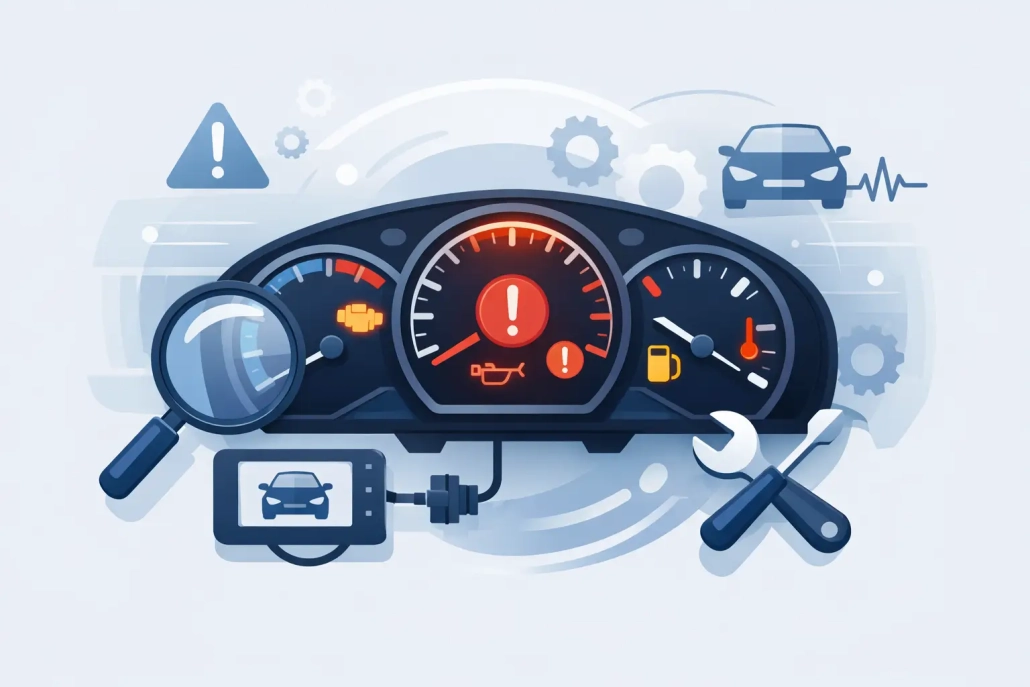
Gauge Cluster Faults Explained Clearly
A speedometer that suddenly drops to zero, warning lights that fade, or an LCD screen missing half its pixels can make a vehicle feel far less trustworthy than it is. Gauge cluster faults explained properly start with one point: the dashboard is not simply a collection of dials. It is an electronic control unit that receives, processes and displays information from systems across the vehicle.
When it develops a fault, the symptoms can look alarming. The good news is that many instrument cluster failures are repairable without replacing the complete unit, losing the vehicle’s original mileage or creating coding issues.
What the instrument cluster actually does
The instrument cluster, often called the dashboard, clocks or speedometer unit, is the driver’s main display for vehicle information. Depending on the make, model and age, it may show road speed, engine speed, fuel level, coolant temperature, warning lights, service messages, mileage, gear position and driver information.
Modern clusters communicate with other vehicle modules over the CAN network. That means a fault may start inside the cluster itself. But it can also come from a power supply issue, poor connection, a failed sensor or a communication problem elsewhere on the vehicle.
This is why replacing a cluster based on symptoms alone is rarely the best first step. A correct diagnosis separates a failed gauge or display from a fault that another system reports to it.
Gauge cluster faults explained by symptom
The symptom is often the quickest route to understanding where the problem may lie. It does not provide a complete diagnosis on its own. But it gives a specialist a strong starting point.
Dead or intermittent gauges
A speedometer, rev counter, fuel gauge or temperature gauge may stop working completely, stick in one position or operate intermittently. On some vehicles, one gauge fails while the rest of the cluster appears normal. On others, several needles behave erratically or sweep to maximum when the driver switches on the ignition.
A failed gauge motor, damaged circuit board, dry solder joint or internal power regulation fault can cause these issues. However, a dead speedometer can also point to a vehicle speed signal fault, while an inaccurate fuel reading may come from the tank sender. Cluster specialists should therefore test it before any component is condemned.
Pixel loss, dim screens and failed LCD displays
Missing pixels are common on older and early modern digital displays. You may still be able to make out parts of the mileage, outside temperature, clock or warning message. But letters and numbers may be incomplete. Some displays work when cold and fade after the cabin warms up. Others become very dim or go blank altogether.
These faults commonly come from deteriorated display connections, failed LCD components or internal circuit faults. They are usually a cluster repair issue rather than a reason to replace the whole unit. A replacement unit may also require programming and can introduce an incorrect mileage reading if it someone handles it badly.
Warning lights that do not illuminate
Warning lamps should illuminate during the ignition self-check, then go out once the engine starts if no fault is present. If important lights such as battery, engine management, ABS, airbag or oil pressure lamps do not come on at all, do not ignore the problem.
The cause might be failed backlighting or LED circuitry within the cluster. It could also be a previous attempt to conceal a vehicle fault. This matters where a warning light has been deliberately disabled. The proper approach is to verify the cluster operation and scan the relevant vehicle systems for stored faults.
Cluster completely dead
A black screen, inactive gauges and no warning lights usually point to a loss of power, earth or communication. Although internal cluster failure is also possible. Before removing the dashboard, checks should include the relevant fuses, battery condition, ignition supply, earth connections and wiring plugs.
If those feeds are correct, the cluster itself may have failed. Water ingress, voltage spikes, internal component breakdown and circuit board damage are all possible causes. A specialist bench test can establish whether the unit is responding correctly outside the vehicle.
Random resets, flickering and incorrect readings
A cluster that reboots while driving, flickers over bumps or displays implausible readings can be particularly frustrating. Intermittent faults are often linked to internal connection failures, poor vehicle power supply, battery voltage issues or moisture damage.
Pay attention to when the fault occurs. Does it appear only on cold mornings, after heavy rain, when headlights are switched on or following a flat battery? These details can make diagnosis considerably faster. A fault that starts after jump-starting or battery replacement may also be related to a voltage event rather than normal component wear.
Why a diagnostic fault code is not the whole answer
Diagnostic equipment may report a “no communication with instrument cluster” fault, an internal control module error or a network issue. This information is useful. But it is not a final diagnosis.
For example, a no-communication code may come from the cluster. But it can also result from a missing power feed, damaged CAN wiring or another module affecting the network. Equally, a gauge that reads incorrectly may have no stored code at all.
A proper repair process combines vehicle-level checks with testing of the cluster itself. Specialist diagnostic equipment and emulators allow technicians to assess the unit under controlled conditions, helping confirm whether the fault is internal before repair work begins. This avoids unnecessary replacement parts and prevents a customer paying to fix the wrong component.
Checks worth making before booking a repair
There are a few sensible checks that can help. This applies when they are safe and do not involve dismantling the dashboard. Check whether other electrical items are affected, such as the radio, interior lights or electric windows. If they are, the issue may be broader than the cluster.
Check the vehicle battery condition if starting has been slow or warning lights appeared after the vehicle stood unused. Low voltage can create several unrelated-looking dashboard warnings. It is also useful to note every symptom, including which gauges work, whether the display is visible at night, and whether the issue is permanent or intermittent.
Do not repeatedly disconnect the battery in the hope that the fault will clear. Some vehicles require settings to be relearned after a battery disconnect, and the original cluster fault will remain if there is a failed internal component. Avoid fitting a used cluster as a quick test unless you understand the coding and mileage implications for that specific vehicle.
Repair or replacement: what is the practical difference?
A main dealer may recommend fitting a new instrument cluster. In some cases that is necessary, particularly when the unit is physically damaged beyond economic repair or no parts are available. But for common display, gauge, lighting and internal electronic faults, repairing the original cluster is often the more sensible option.
Original-unit repair retains the vehicle’s existing mileage and coding because the same cluster remains with the car. It also avoids the potential complications of sourcing, programming and adapting a replacement unit. For owners, that can mean lower cost and less time off the road. For garages, it means a clearer route to resolving a specialist electrical fault without sending the customer straight to dealer replacement.
The right answer depends on the vehicle and failure. A good repair provider will identify whether the unit is suitable for repair rather than promising a fix before it has been properly assessed.
When the vehicle should not be driven
A cluster problem is not always just an inconvenience. If the speedometer is inoperative, it is difficult to drive legally and safely because you cannot reliably monitor road speed. If the oil pressure, coolant temperature or battery warning light cannot be seen, you may miss a condition that could cause serious engine damage or leave you stranded.
Stop driving and arrange professional help if the dashboard failure accompanies overheating, a red oil warning, battery charging problems, smoke, burning smells or multiple major electrical faults. The cluster may not be the only issue.
For isolated pixel loss or a dim driver information display, the vehicle may remain usable. But arranging repair sooner is still wise. Small display faults tend to worsen, and important messages can become impossible to read.
A faster route to a reliable repair
For clusters from 1996 onwards, a specialist repair service can test the original unit, repair the confirmed internal fault and return it ready to refit. Cartronix provides national postal repairs as well as while-you-wait workshop appointments, with many repairs completed the same day or next working day. Repairs retain original mileage and coding, and are covered by a lifetime warranty for as long as you own the vehicle.
When booking, provide the vehicle make, model, year, engine where relevant, and a precise description of the dashboard fault. Photographs or a short video of the symptom can be useful for intermittent display and gauge problems. Garages should also include any diagnostic codes and details of checks already completed.
A faulty dashboard does not automatically mean an expensive new cluster. Get the symptom checked accurately, protect the original unit where repair is practical, and you will have the best chance of getting the vehicle back on the road without unnecessary delay.




