
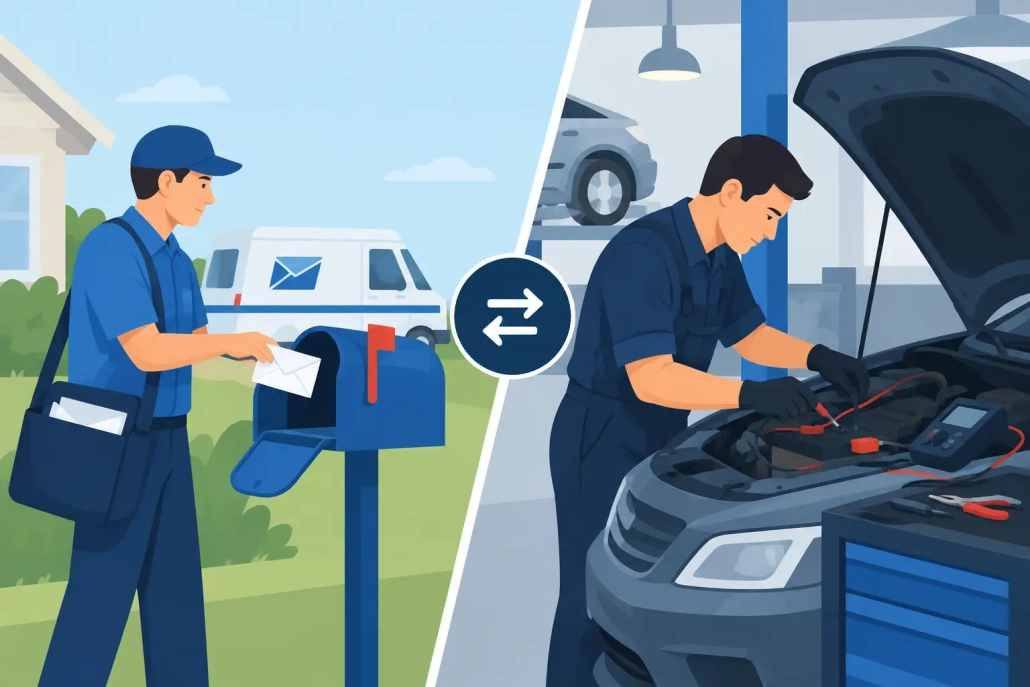
Postal Repair vs Local Auto Electrician: Which?
A dead speedometer, flickering gauges or missing pixels can make a car feel unusable very quickly. When comparing postal repair vs local auto electrician, the right choice depends less on distance and more on what has actually failed. A local auto electrician may be ideal for wiring, battery drain or charging faults. For an internal instrument cluster fault, a specialist postal repair can be faster, more economical and far less disruptive than replacing the whole unit.
The key is to match the repair route to the fault. Instrument clusters are coded electronic modules, not simply a collection of bulbs and needles. They often need model-specific testing, controlled bench equipment and component-level repair to produce a lasting result.
Postal repair vs local auto electrician: the main difference
A local auto electrician usually works on the vehicle. Their work may include tracing damaged wiring, testing fuses and earths, diagnosing CAN communication issues, finding parasitic battery drains and repairing charging-system faults. This is valuable expertise, particularly where the vehicle has an electrical problem beyond the dashboard itself.
A postal instrument cluster repair specialist works directly on the removed unit. The cluster is tested on dedicated equipment, often using emulators that replicate signals from the vehicle. This allows the fault to be isolated at board and component level, rather than relying on a replacement part to see whether the problem disappears.
That distinction matters. If the vehicle has no power at the cluster connector, a specialist repair to the dashboard will not resolve it. If the cluster powers up but has failed gauges, a blank LCD display, pixel loss, dim warning lights or intermittent operation, sending the original unit to a repair specialist is often the more targeted option.
When a local auto electrician is the sensible first call
There are faults that need investigating with the cluster still installed. A competent local auto electrician is usually the best starting point when the issue points to the vehicle rather than the dashboard unit.
For example, several unrelated modules may be offline, the cluster may lose power after a wiring repair, or a fault may have appeared after water ingress, rodent damage, an accident or an accessory installation. The technician can test supplies, earths, fuses, connector pins and network signals in situ. They can also confirm whether the cluster is receiving what it needs to operate.
This route can be particularly useful for garages handling an uncertain diagnosis. Before removing a cluster, it is sensible to establish that the relevant power and earth feeds are present and that the vehicle communication network is not the underlying issue. A good electrician may also identify a fault code that gives a clearer direction.
The trade-off is that a general electrical workshop may not repair the internal electronics of every instrument cluster. Some will arrange a replacement unit, outsource the repair or refer the job once they have confirmed the cluster itself is at fault. That is not a failing – it is simply where specialist bench repair begins.
When postal cluster repair makes more sense
Postal repair is designed for faults contained within the original instrument cluster. Typical symptoms include a speedometer or rev counter that has stopped working, gauges reading incorrectly, an LCD screen with missing lines or pixels, a display that fades when warm, failed backlighting, warning lights that are dim or permanently illuminated, and a cluster that is completely dead despite correct vehicle feeds.
With a specialist repair, the original unit is retained. This is a major advantage over fitting a used cluster, which can introduce incorrect mileage, incompatible coding, immobiliser issues or warning messages. Replacement through a main dealer can also mean a higher bill and a wait for parts, programming and installation.
A properly repaired original cluster keeps the vehicle’s identity intact. Mileage and coding remain with the module already matched to the car, which reduces the risk of extra programming work. For owners, it is a more straightforward route. For garages and dealerships, it avoids turning a known internal fault into a parts and coding exercise.
Cartronix provides nationwide postal repairs and while-you-wait workshop appointments for many modern instrument cluster faults, with repairs typically completed on a same-day or next-working-day basis once the unit is received.
Cost is not just the repair price
A local call-out or workshop diagnosis can be worthwhile when the source of the fault is unclear. However, labour time can build up if an electrician has to trace an intermittent problem across a vehicle’s wiring and modules. If the cluster is then confirmed faulty, there may still be a separate repair or replacement cost to consider.
Postal repair is normally more predictable when the symptoms strongly indicate an internal cluster fault. You remove the unit, send it for testing and repair, then refit the same unit when it is returned. The vehicle may be off the road while the dashboard is away, but there is no need to book it into a dealer for a replacement cluster and subsequent coding in many cases.
A cheap used cluster can look tempting, especially for an older car or van. It is rarely a like-for-like answer. The donor unit may carry a different mileage reading, require matching to the vehicle, have its own hidden faults or not be compatible with the exact part number. It also does not address the reason the original cluster failed.
The best value is usually the option that fixes the confirmed fault first time, preserves the original electronics and includes meaningful warranty cover. Price should be clear, including VAT, but the real comparison is total cost: diagnosis, parts, programming, downtime and the chance of needing the job done again.
Turnaround and vehicle downtime
Convenience is the strongest argument for a local auto electrician. You can take the vehicle to a nearby workshop and leave the diagnosis to them. If the fault is external to the cluster, that is exactly what should happen.
Postal repair becomes convenient when the problem is known to be inside the unit. The cluster can be removed by an owner who is confident and follows the correct procedure, or by a local garage. It is then securely packaged and sent to the repairer. There is no need to transport the entire vehicle across the country.
For trade customers, this can keep workshop space free. A garage can remove the cluster, continue with other work and refit the repaired unit as soon as it returns. For owners of motorhomes, vans and older prestige vehicles, avoiding a dealer visit can be particularly useful where booking availability is limited.
Removal needs care. Always disconnect the battery where the manufacturer procedure requires it, protect trim panels and do not force connectors. If there is any doubt, ask a garage to remove and refit the unit. Damage caused during removal can turn a straightforward repair into an avoidable expense.
Diagnostic capability matters more than location
Not every cluster fault is visible on a fault-code reader. A diagnostic scan may show communication errors, but it cannot always identify failed internal components, degraded display connections or worn gauge motors. Equally, a cluster that appears faulty may be responding correctly to a missing vehicle signal.
This is why the best repair route is based on evidence. A specialist should be able to test the unit under controlled conditions and identify whether the reported fault is present. A local electrician should be able to confirm the quality of supplies, earths and network communication at the vehicle side.
For an intermittent fault, provide as much detail as possible. State whether the issue happens from cold, after the cabin warms up, over bumps, in wet weather or only after the engine starts. Mention every affected gauge, light or display area. A precise symptom description can save diagnostic time and help distinguish a cluster fault from a vehicle fault.
Warranty and confidence after repair
Warranty is where repair quality becomes easier to judge. A short warranty may cover an immediate failure, but it offers less reassurance for a component fault that could return months later. A lifetime warranty tied to your ownership of the vehicle provides stronger protection, provided it clearly covers the repair carried out and the terms are understood.
Ask what happens if the fault remains after refitting. If a specialist tests the cluster and finds no internal defect, that result is still useful – it points the diagnosis back towards the vehicle wiring, connectors or another control module. The important thing is avoiding guesswork and repeated part swapping.
Choosing the right route for your fault
Choose a local auto electrician first when power, wiring, water ingress, network communication or several vehicle systems may be involved. Choose specialist postal repair when the cluster has a known internal symptom and the vehicle-side checks are satisfactory.
For many drivers and workshops, the most efficient approach uses both skills in the right order: verify the vehicle feeds locally, then repair the original dashboard unit with a specialist if the fault is inside it. That keeps diagnosis honest, avoids unnecessary dealer replacement costs and gives the car the best chance of returning with its original mileage, coding and instruments working as they should.


