
Can a Faulty Cluster Drain a Car Battery?
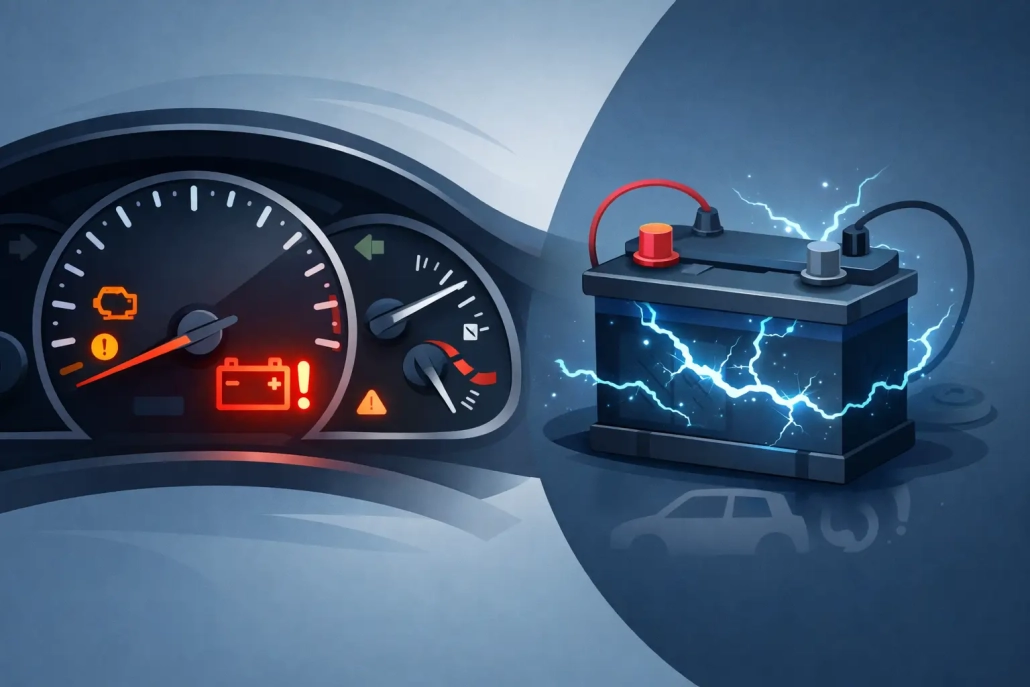
A car that starts perfectly one day and has a flat battery the next is frustrating enough. When the dashboard stays illuminated, flickers after the driver removes the key. It may also appear to wake up at random, the question is fair. can a faulty cluster drain battery power? Yes, it can. Although it is not the most common cause of an overnight battery drain.
An instrument cluster is not simply a set of gauges. On many modern vehicles it is an electronic control module, connected to the vehicle network and supplied with permanent and ignition-switched power. If an internal fault prevents it from entering sleep mode, keeps a display or backlight active. It may also repeatedly wake other modules, it can create a parasitic battery drain. Proper diagnosis matters. This matters because replacing a cluster without proving the fault can be an expensive guess.
Can a Faulty Cluster Drain a Battery?
A healthy vehicle still uses a small amount of current when parked. The alarm, central locking receiver, clock, radio memory and control modules need a permanent supply. Once the vehicle has locked and all modules have gone to sleep, this quiescent current is commonly around 20-50 milliamps. Although the acceptable figure varies by vehicle.
A faulty instrument cluster can push that figure higher. A drain of several hundred milliamps may flatten a marginal battery overnight or within a few days. The effect depends on the battery condition, ambient temperature, how long the car stands unused and whether other electrical faults exist.
The cluster is more likely to be responsible when it remains visibly active after the driver switches off the ignition, when warning lights glow faintly, or when the display, needles or illumination operate without driver input. In other cases, the cluster looks dead from the driver’s seat but has an internal circuit fault that remains active in the background.
That said, a flat battery is not proof of a failed dashboard. Batteries nearing the end of their life, alternator diode faults, aftermarket stereos, telematics devices, boot lights, door modules and water ingress are all frequent causes. The right approach is to measure the drain, isolate the circuit and confirm why the vehicle is not going to sleep.
Signs Your Instrument Cluster May Be Causing a Drain
The strongest clues usually point to unusual cluster behaviour. You may find the backlighting remains on after locking the car, the LCD display continues to show information, or a warning lamp glows when the ignition is off. Some owners notice a clicking sound behind the dashboard, needles twitching, or the cluster resetting when the driver unlocks the vehicle.
Intermittent faults are particularly relevant. For example, a cluster may work normally during a journey but reboot repeatedly once the driver parks the vehicle. The battery drain then appears random because it only occurs when a particular internal component, solder joint or communication fault is active.
Communication errors can also be a clue. If diagnostic equipment reports intermittent loss of communication with the instrument panel, or multiple modules wake together, the cluster may be disrupting the vehicle network. This does not automatically mean the cluster itself is defective. Damaged wiring, a corroded connector or another module on the same network can produce similar symptoms.
A failed speedometer, pixel loss or dim display alone does not necessarily cause a drain. Those are common cluster faults. But the section of circuitry causing the visible problem may be separate from the power-management circuit. This is why a specialist test is more useful than assuming every faulty display is flattening the battery.
How a Cluster Creates a Parasitic Drain
Most clusters have a permanent battery feed to retain mileage, time, stored settings and fault information. They also receive switched power and network signals to wake up when the driver uses the vehicle. After the ignition is turned off and the driver locks the vehicle, the cluster should reduce its current draw and enter sleep mode.
An internal electronic failure can prevent this happening. A shorted component, damaged voltage regulator, failed display driver or water damage may keep part of the circuit powered. On some vehicles, a fault on the CAN network can cause the cluster to send or respond to messages when it should be asleep. That activity may keep other control units awake as well.
Previous repair work can be relevant too. A loose connector, trapped wiring behind the dashboard or an incorrectly fitted aftermarket accessory may affect the cluster feed or vehicle network. Before condemning the unit, inspect for signs of disturbed wiring, moisture and non-standard electrical additions.
Testing a Suspected Cluster Battery Drain
Testing a parasitic draw needs patience. Many vehicles take 20 minutes or longer to enter sleep mode. Opening a door, operating the remote, connecting a charger or moving a key near a keyless vehicle can wake modules and spoil the reading.
A technician will normally begin by checking the battery state of health and charging system. A weak battery can mimic a drain, while an alternator with a leaking diode can discharge the battery with the engine off. Once these you confirm these basics, the vehicle’s resting you can measure the resting current with an ammeter or current clamp.
If the draw remains excessive after the vehicle has settled, the next stage is circuit isolation. Removing the instrument-cluster fuse and watching for a significant current drop can be a useful indication. It is only an indication, however. On many cars that fuse supplies additional items, and removing it may stop another module from communicating. Fuse charts and wiring diagrams are essential for an accurate result.
Do not pull fuses or disconnect modules with the engine running. Avoid disconnecting the battery unless you know the vehicle’s procedure, as this can cause lost settings, radio security issues or fault codes. Modern vehicles can be sensitive to low voltage and incorrect testing methods.
Why fault-code reading is not enough
A diagnostic scan is valuable. But it will not always identify a parasitic drain. A cluster can draw too much current without logging a fault code. Equally, a communication code may be historic and unrelated to the battery issue.
The most reliable diagnosis combines scan data, live network activity, voltage-drop or current testing, fuse isolation and inspection of the cluster itself. Specialist bench testing can then assess the original unit under controlled conditions, without relying on symptoms alone.
Repair or Replacement?
If the testing confirms the cluster as the cause, repair is often the sensible option. Replacing a modern instrument cluster can involve dealer-level coding, immobiliser or security procedures and mileage configuration. A used unit is rarely a straightforward substitute and may introduce compatibility, mileage and warning-light issues.
Repairing the original cluster retains the vehicle’s original mileage and coding. It also avoids replacing a complete assembly when the fault sits to a component, display circuit or power-management section. The right repair depends on the vehicle and fault, so an accurate diagnosis should come before any decision.
For owners and garages, the practical benefit is shorter downtime. Cartronix tests and repairs original instrument clusters for a wide range of vehicles, with postal repair options and while-you-wait appointments available for suitable jobs. Cartronix backs repairs by a lifetime warranty for as long as you own the vehicle, providing reassurance that the repair has addressed the fault rather than masked.
When the Cluster Is Not the Problem
If removing or disconnecting the cluster does not reduce the resting current, keep looking. Common causes include a glovebox, boot or vanity-mirror lamp that remains on; a door latch module reporting that a door is open; water ingress into a body control module; and aftermarket trackers, dash cameras or audio equipment wired to a permanent live.
Vehicles used only for short journeys can also develop a battery that never fully recharges. In that situation, there may be no abnormal drain at all. A battery test, charging-voltage check and usage assessment will prevent spending time on the wrong fault.
A faulty cluster can drain a car battery, particularly when it fails to sleep or keeps the vehicle network active. But the answer should come from measured current and proper isolation, not from a dashboard symptom alone. Proving the cause first gives you the best chance of a lasting repair and a car that starts when you need it.




