
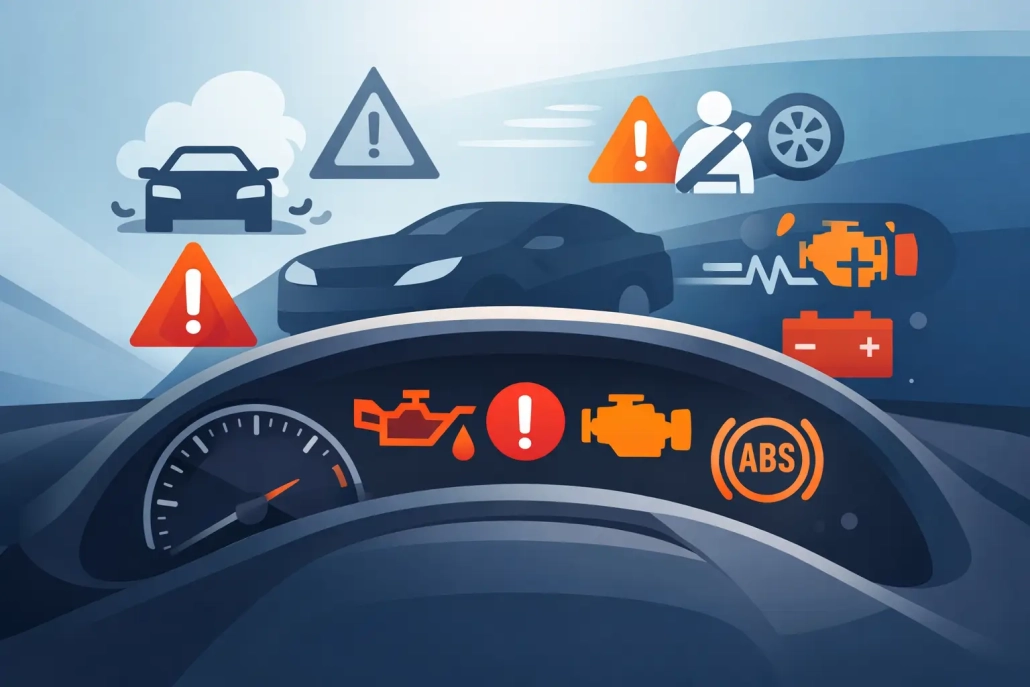
Top Dashboard Display Fault Symptoms to Watch
A dashboard that starts losing pixels or goes blank intermittently is rarely a fault to ignore. The top dashboard display fault symptoms often begin subtly: a few missing characters on the mileage readout, a clock that fades in warm weather, or a warning message that cannot be read clearly. Left alone, many display faults deteriorate until essential information is no longer visible.
For drivers, this is frustrating and potentially unsafe. For garages, it can complicate diagnostics, MOT preparation and vehicle handover. Knowing whether the problem sits in the display itself, the instrument cluster, the vehicle wiring or the battery supply is the first step towards the right repair.
Top dashboard display fault symptoms
Dashboard displays vary by vehicle, but the signs of failure are remarkably consistent across cars, vans and motorhomes. A screen does not always fail completely at once. In many cases, heat, vibration, ageing components and deteriorated display connections cause a gradual decline.
Missing pixels, lines or unreadable numbers
Pixel loss is one of the most common faults on LCD and dot-matrix displays. Sections of letters disappear, numbers become incomplete, or vertical and horizontal lines run through the screen. You may still be able to guess the message, but the display is no longer doing its job properly.
This is especially common on older digital centre displays and instrument clusters, where the bonding between the display and its ribbon connection begins to fail. The issue can be more obvious in cold weather, then improve as the cabin warms up – or vice versa. That temporary improvement does not mean the fault has fixed itself.
A dim display or no backlighting
If your dashboard information is present but difficult to see at night, the backlighting may be failing. A dim display can affect the odometer, trip computer, gear indicator, climate information or warning symbols. Sometimes only part of the screen is dark; in other cases, the illumination fails across the whole cluster.
Do not assume this is simply a dashboard brightness setting. If the brightness control has no effect, or one area remains noticeably darker than the rest, the cluster may need specialist attention. Failed illumination components, internal circuit faults and display issues can all produce similar symptoms.
The display cuts in and out
An intermittent dashboard display is a strong indication of an internal connection or electronic fault. The screen may work after starting the vehicle, disappear while driving, then return after switching the ignition off and on again. It may also react to bumps in the road, changes in temperature or prolonged use.
Intermittent faults are often the most difficult for a general workshop to reproduce. A vehicle may arrive with the display working normally, even though the owner has clear evidence of a recurring problem. Specialist testing with the correct equipment can help identify a cluster fault without replacing parts unnecessarily.
A completely blank screen
A blank dashboard display does not automatically mean the whole instrument cluster has failed. If the gauges, warning lights and indicators continue to work, the fault may be limited to the LCD display, its power supply or the internal circuitry that controls it.
If the display is blank alongside dead gauges, no warning lamps or a cluster that will not wake up, the problem is more likely to involve the complete instrument panel or its communication with the vehicle. The distinction matters because replacing a complete unit can create unnecessary cost, coding work and mileage complications when the original unit may be repairable.
Flickering text, random characters or distorted images
A display that flickers, flashes, changes colour unexpectedly or shows garbled characters is not always a software problem. Internal electronic components can become unstable, especially after years of heat cycles behind the dashboard. Moisture ingress, previous jump-starting issues and voltage spikes can also contribute.
Occasional flickering immediately after a weak battery event may settle once the battery and charging system are checked. However, repeated distortion, scrambled text or a screen that resets while driving should be investigated. Important messages such as low fuel, service warnings and gearbox information must be visible when needed.
Symptoms that point beyond the display
Not every dashboard fault is a display fault. A good diagnosis looks at the full set of symptoms rather than ordering a replacement screen or cluster on guesswork.
If the display fails at the same time as central locking, electric windows, stereo functions or other electrical systems, check the vehicle battery, charging voltage, fuses and body control modules first. Low voltage can cause multiple warning lights and communication errors that look more serious than they are.
Where the display works but the speedometer, rev counter, fuel gauge or temperature gauge behaves incorrectly, the fault may be within the instrument cluster. It could also relate to a sensor, wiring issue or vehicle network communication problem. A speedometer reading zero, for example, may stem from a vehicle speed signal issue rather than the display panel.
Warning lights deserve separate attention. A warning light that is permanently illuminated can indicate a genuine vehicle fault, while a warning light that does not illuminate during ignition-on checks could point to failed cluster LEDs, damaged circuitry or previous tampering. Neither should be ignored simply because the car appears to drive normally.
When a dashboard display fault needs prompt action
A few missing pixels may feel like a cosmetic problem, but the practical impact depends on what the display controls. If you cannot read mileage, fuel range, outside temperature, service messages, tyre pressure alerts or transmission information, the fault can quickly become more than an inconvenience.
Arrange diagnosis promptly when the display prevents you from seeing warning messages, when it cuts out while driving, or when the instrument cluster is showing multiple errors alongside gauge faults. This is particularly relevant before an MOT, before selling the vehicle, or when a garage needs accurate mileage and warning information to complete other work.
For trade customers, a recurring display problem can delay a retail handover and invite a return visit after sale. Repairing the original unit is often the more sensible route, provided the fault has been correctly identified. It retains the vehicle’s original mileage and coding rather than introducing the extra work associated with fitting and programming a replacement cluster.
Why repair is often better than replacement
Main dealer replacement is not always the only answer for a failed dashboard display. A new instrument cluster can be expensive and may require coding, mileage alignment and immobiliser-related programming. Depending on the vehicle, it can also mean longer downtime while parts are sourced.
A specialist repair focuses on the failed components within the original unit. This can be a practical option for pixel loss, LCD failure, dim displays, gauge faults, failed warning lights and complete cluster faults. The right approach depends on the make, model, year and exact symptoms, which is why accurate fault details matter when booking a repair.
Cartronix repairs original instrument clusters for a wide range of vehicles, with postal repairs nationwide and workshop appointments available. Many common faults can be turned around the same day or next working day, subject to the unit and fault type, with a lifetime warranty for as long as you own the vehicle.
Before removing a cluster, record every symptom you have seen. Note whether the issue is constant or intermittent, whether it changes with temperature, which gauges and warning lights are affected, and whether the vehicle has recently had a flat battery or electrical work. Clear details help avoid wasted time and ensure the repair is aimed at the real fault.
A fading display may be the first warning, but it does not need to become a complete dashboard failure. Acting while the symptoms are still clear usually gives you the best chance of a straightforward, cost-effective repair.




Trackbacks & Pingbacks
[…] vehicle systems. A fault may appear as a dead speedometer, intermittent gauges, a black LCD screen, missing pixel lines, dim illumination, warning lights that will not display, or a complete no-communication […]
Comments are closed.