
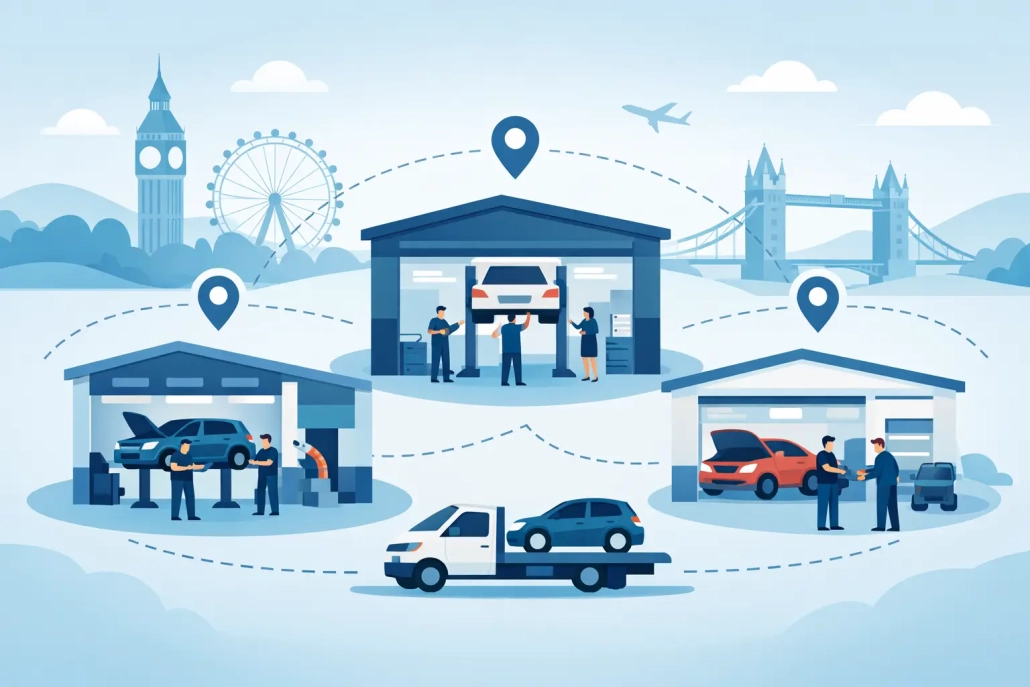
Workshop Cluster Outsourcing for UK Garages
A vehicle can be mechanically sound and still be undriveable in the customer’s eyes when the speedometer drops out, the display loses pixels or warning lights stop working. Workshop cluster outsourcing gives garages a practical way to resolve these faults without turning away the job, fitting an expensive replacement unit or taking on specialist electronics work without the right test equipment.
For an independent garage, the value is straightforward. Keep control of the customer relationship while a specialist diagnoses and repairs the original instrument cluster. For main dealers, it can provide an alternative where a replacement cluster is costly, back-ordered or unsuitable for a vehicle the customer intends to keep. The right repair partner helps reduce downtime, preserve vehicle originality and return a tested unit ready to refit.
What workshop cluster outsourcing actually covers
Instrument clusters are more than a collection of gauges. On modern cars, vans and motorhomes, the dashboard is an electronic control unit that communicates with other vehicle systems. A fault may appear as a dead speedometer, intermittent gauges, a black LCD screen, missing pixel lines, dim illumination, warning lights that will not display, or a complete no-communication condition.
A specialist repair service assesses the cluster itself rather than assuming the entire unit needs replacement. Depending on the model and fault, this can involve repairing internal electronic components, display connections, power supply circuits, stepper motors or communication-related faults. Proper diagnosis matters because similar symptoms can also come from vehicle wiring, low battery voltage, CAN network issues or another control module.
That distinction is where outsourcing earns its place. A general workshop can complete its normal checks, confirm the vehicle-side supply and communication where appropriate, then send the cluster to a dedicated electronics repairer for component-level testing. The garage does not need to invest in model-specific emulators, display repair equipment or the time needed to develop a repair process for every make.
Why repair is often better than replacement
Dealer replacement is not always the simple answer it appears to be. A new cluster can be expensive, may require ordering and programming, and can introduce mileage, coding and configuration complications. Some units have restrictions, unavailable or supplied only as part of a wider dealer process.
Repairing the original unit avoids many of those issues. Where the original cluster the vehicle keeps it, its vehicle-specific data, mileage and coding can usually remain in place. This is particularly valuable on vehicles where replacement programming is time-consuming or where the customer is concerned about preserving the car’s original components.
There are limits, of course. Fire damage, severe water ingress, physical impact damage or an irreparably corroded circuit board may make repair uneconomical. A reputable specialist should say so after assessment rather than promise a repair regardless of condition. For the large number of common electronic and display faults, however, repair can be faster and considerably more economical than fitting a replacement unit.
When a garage should outsource an instrument cluster
The best time to outsource is not after several unsuccessful attempts to fix the fault. If the symptom points strongly to the dashboard and the basic vehicle checks are satisfactory, sending the unit to a specialist early protects both workshop time and customer confidence.
Common referral jobs include Audi and Volkswagen Group pixel faults, Ford instrument cluster failures, Fiat dashboard display issues, Alfa Romeo gauge or illumination faults, and faults on prestige vehicles where a replacement unit carries a high price. The exact fault varies by model and year. But the operating principle is the same. Identify whether the cluster is the likely cause, then have the original unit professionally tested.
It is also sensible to outsource when a vehicle is due to leave quickly. A customer may manage without the car for a day. But not for a week while a new unit arrives and receives coding. A same-day or next-working-day repair service can turn a difficult booking into a straightforward repair job.
The checks to make before removing the cluster
Outsourcing works best when the specialist receives accurate information. Before removing the dashboard, record the customer’s reported symptoms and whether the fault is constant, intermittent, temperature-related or linked to starting the vehicle. Note any diagnostic trouble codes, warning messages and visible display behaviour.
Check the obvious vehicle-side causes first. Battery condition, charging voltage, relevant fuses, earth connections, connector condition and network communication do not overlook them. If the cluster powers up but gives implausible readings, the fault may still be in a sender or another control unit rather than the dashboard itself.
When removal is justified, handle the unit carefully. Avoid prising lenses, applying power to unknown pins or attempting a quick solder repair on a multilayer circuit board. Those interventions can create secondary damage and make diagnosis harder. Pack the cluster securely, include the vehicle registration, make, model, year, engine details where known, and a clear description of the fault.
For trade jobs, it helps to agree the approval process in advance. Decide whether the specialist can proceed once the testing confirms the fault or call before repair if the repair needs additional work. This keeps the garage in control of the estimate it gives the customer.
Choosing a workshop cluster outsourcing partner
Turnaround time matters. But it should not be the only deciding factor. A fast repair that has skipped proper testing simply returns the risk to the workshop. Look for a specialist that understands the specific cluster, has the means to test it away from the vehicle and can explain what the repair covers by the repair.
A dependable partner should offer clear answers on these points:
- Whether the original mileage and coding remain intact
- How specialists test the unit before return
- Typical repair turnaround and return-post options
- The warranty period and whether it transfers with the vehicle
- What happens if the cluster is found to be beyond economical repair
The warranty deserves close attention. A meaningful repair warranty gives the garage confidence to stand behind the work it has supplied. Cartronix provides a lifetime warranty for the period of vehicle ownership, which is particularly useful for trade customers who want a long-term answer rather than a short-term fix.
Building outsourcing into your workshop process
The most effective garages treat specialist electronics repair as part of their standard workflow, not as an exception. Service advisers know which symptoms need an initial electrical check. Technicians record the necessary fault information. The cluster is removed, packaged and sent without delay, while the customer receives a realistic collection date.
Transparency is good business here. Explain that the dashboard is being repaired by a specialist rather than replaced unnecessarily. Most customers understand the benefit immediately when they hear that their original mileage and vehicle coding can be retained, the cost is lower than a new dealer unit and the repair is warranty-backed.
Pricing should reflect the full job, including diagnosis, removal, refitting and any postage or handling. Avoid presenting the specialist repair as a vague third-party charge. It is a skilled part of the repair process, and a clear quotation prevents difficult conversations once the work is complete.
There is also a useful commercial benefit. By keeping the job in-house from the customer’s perspective, the garage retains labour revenue and avoids losing a loyal customer to a dealer. The specialist handles the electronics, while the workshop remains responsible for the vehicle, the refit and the final handover.
Avoiding the common mistakes
The most expensive mistake is condemning a cluster without checking the vehicle. The next is replacing a cluster because it is available. That avoids repairing the original unit. Both can increase cost and extend downtime.
Another common issue is poor communication. If a specialist is told only that a cluster is “dead”, valuable diagnostic clues may be missing. A concise fault history, scan results and vehicle details give the repairer a better starting point and can prevent unnecessary delays.
Finally, do not promise a fixed outcome before the unit has been assessed. Many common faults are repairable. But electronic damage varies. Promise a proper diagnosis, a clear repair price where possible and an honest recommendation if replacement is the only sensible route.
A specialist cluster repair partner should make your workshop more capable without making your process more complicated. When the dashboard fault is identified early, the original unit is handled properly and the customer is given a clear timescale, outsourcing becomes a reliable way to get a difficult vehicle back on the road.




