
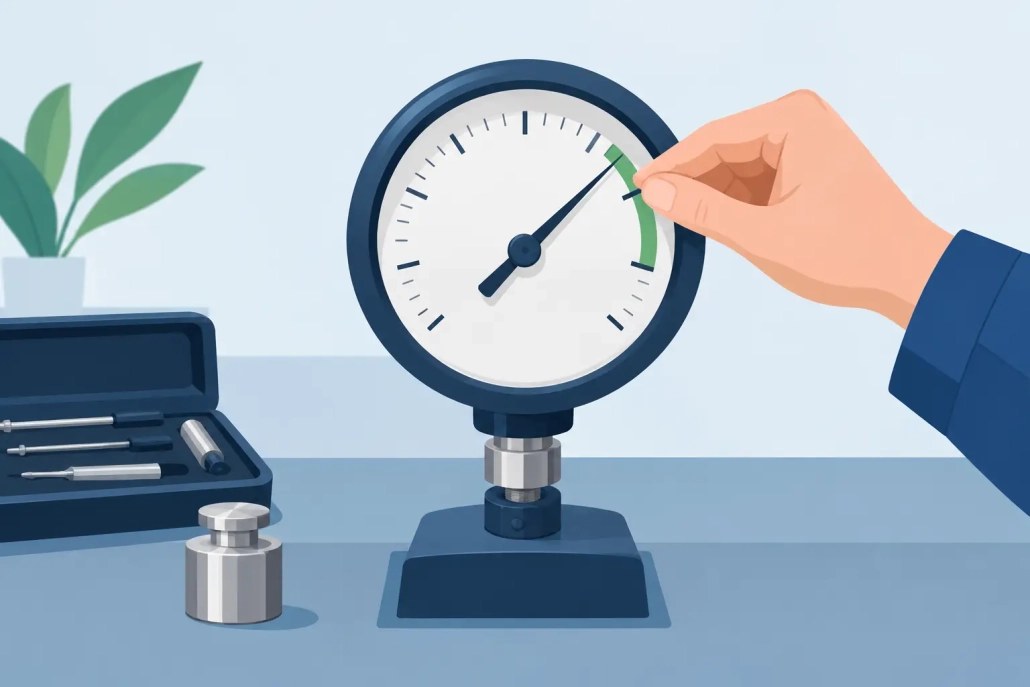
Gauge Needle Calibration for Accurate Readings
A speedometer that reads 10 mph too high, a fuel gauge that never reaches full, or a temperature needle sitting in the wrong place can make every journey less certain. Gauge needle calibration is the process of setting each instrument needle to the correct position so the cluster reports what the vehicle is actually doing – not an approximation caused by a failing gauge, previous repair or incorrect refitting.
For many vehicles, the answer is not a replacement dashboard from the dealer. A properly repaired and calibrated original instrument cluster keeps the vehicle’s mileage, coding and configuration intact, while resolving the fault that caused the incorrect reading.
What gauge needle calibration actually corrects
Instrument needles are fitted to small stepper motors or gauge mechanisms behind the dial face. The control electronics send a command, and the motor moves the needle to a defined position. If the motor misses steps, sticks, has been removed during a repair, or has been refitted out of position, the reading shown to the driver may no longer match the signal being received.
Calibration sets a known reference point and checks the needle’s movement across its operating range. On a speedometer, that means confirming the needle returns to zero and follows commanded speeds accurately. On fuel and temperature gauges, it means checking that the displayed position corresponds with the information supplied by the sender and vehicle control modules.
This work is often required after replacing failed gauge motors, repairing cluster circuitry or fitting new needles during an LCD or dial repair. It can also be required where needles have physically slipped on their spindles, particularly if a cluster has been opened previously.
Calibration is not simply pushing a needle back to the zero mark by eye. A gauge can look correct with the ignition off yet still be inaccurate through the middle or upper part of its travel. The reference position, motor operation and electronic command all need to agree.
Signs your instrument needles need attention
An incorrect needle position is usually noticeable, but the pattern of the fault matters. A speedometer that remains above zero after the ignition is switched off points towards a motor or needle-position issue. A tachometer that jumps, sticks or settles at random may have a failing stepper motor, internal connection fault or power supply issue within the cluster.
Fuel and temperature faults need more care. A fuel gauge that reads empty with fuel in the tank may be caused by the sender unit, wiring, tank connector or the instrument cluster itself. Likewise, a temperature needle that sits high does not automatically mean the gauge is wrong. The engine may genuinely be overheating, or there may be a fault with the coolant temperature sensor, wiring or cooling system.
Common symptoms include:
- a needle that does not return to zero
- a reading consistently too high or too low
- a gauge that sticks at one point or moves intermittently
- several needles behaving incorrectly at once
- a needle that changed position after cluster removal or repair
- warning lights and display faults alongside gauge problems
Where several instruments, warning lights or the LCD display are affected, the underlying issue is more likely to be within the cluster electronics than a single gauge motor.
Why accurate gauge readings matter
A speedometer is not just a convenience. An inaccurate reading can lead to poor speed judgement, unnecessary concern about vehicle performance and potential legal consequences. Speedometers are permitted a limited tolerance, but a suddenly changed reading is a fault to investigate, not something to work around.
Fuel and temperature readings are equally useful when they can be trusted. A fuel needle that falls rapidly or remains on empty may leave a driver relying on guesswork. A temperature gauge that falsely reports an overheat can cause understandable worry, while one that remains low despite a genuine engine temperature problem could delay necessary action.
For trade customers, a correctly functioning cluster also matters at handover. A repaired vehicle should leave the workshop with gauges that operate consistently and warning information that can be relied upon. Sending a unit to a specialist for proper testing can prevent repeat visits and avoid replacing parts based on misleading dashboard readings.
Gauge needle calibration starts with diagnosis
The best repair route depends on why the reading is wrong. Calibrating a needle without identifying a failed motor, a damaged circuit track or an incorrect input signal may provide only a short-lived result – or no improvement at all.
A specialist diagnosis checks the cluster on the bench where appropriate, using controlled inputs and emulators to simulate vehicle signals. This allows gauge operation to be tested without assuming that the sensor, engine control unit or vehicle wiring is at fault. Needle sweep tests can reveal sticking motors, dead spots and inconsistent movement that may not be obvious during a short road test.
Vehicle diagnostics are still relevant. If the cluster receives incorrect information from another control module, repairing the gauge alone will not correct the displayed value. For example, a speed signal issue, faulty fuel level sender or communication fault on the vehicle network can all produce a misleading reading on an otherwise healthy instrument cluster.
This is why the fault description is valuable when booking a repair. Details such as whether the needle fails from cold, only after driving, after battery disconnection or alongside pixel loss can help narrow down the likely cause before the unit is tested.
The repair process for a misreading gauge
Once the fault is confirmed within the cluster, the unit is opened carefully and the affected components are inspected. Depending on the design, this may involve replacing a worn stepper motor, repairing internal circuitry, correcting a damaged connection or addressing a power-related fault affecting multiple gauges.
The needle is then fitted and calibrated against controlled test points. The technician checks its rest position, response, full sweep and repeatability. Repeatability is particularly important: a needle that reaches the correct point once but returns to a different position after several cycles is not a successful repair.
The cluster should also be tested as a complete assembly. Gauges, warning lamps, illumination and display functions can share internal power supplies or communication paths. Testing the complete unit reduces the chance of resolving one visible symptom while missing another developing fault.
On modern vehicles, retaining the original cluster is usually the sensible option. Replacement units can create additional work involving coding, immobiliser matching, mileage configuration and module compatibility. Repairing the original unit avoids those complications where possible and preserves the vehicle’s established data.
Can you reset or calibrate a needle yourself?
It is possible to remove a cluster and reposition a loose needle, but it is rarely a reliable repair without the correct test equipment and experience. Needles are delicate, dial faces can mark easily, and excessive force can damage the gauge spindle or motor. Even a small positioning error can become significant at normal driving speeds or fuel levels.
There is also a risk of treating the symptom rather than the cause. If the needle has shifted because the motor is failing, manually setting it to zero may work briefly before the fault returns. If the gauge is responding to an incorrect sender signal, moving the needle cannot make the reading accurate.
Mileage data must never be altered as part of gauge work. A legitimate instrument cluster repair retains the vehicle’s existing mileage and coding. If a replacement cluster is genuinely necessary, any mileage-related work must be handled correctly, transparently and in line with legal requirements.
For garages, a quick visual check is useful before removing a cluster: scan for relevant fault codes, confirm live data where available and inspect battery voltage and charging performance. Low voltage can cause unusual dashboard behaviour, especially on vehicles with multiple electrical symptoms. But once the evidence points to the cluster, bench diagnosis is generally faster than repeated parts swapping.
When a calibration issue may be something else
Not every inaccurate dial is a calibration fault. A temperature gauge that rises only in traffic may indicate a cooling fan or thermostat issue. A fuel gauge that changes on hills can be normal within limits, as fuel moves in the tank. A speedometer discrepancy compared with a satellite navigation app can also reflect the vehicle’s permitted speedometer tolerance, tyre size changes or differences in how speed is measured.
The key question is whether the reading has changed from the vehicle’s normal behaviour, is clearly inconsistent, or is accompanied by other cluster faults. A needle sitting at 20 mph when stationary, for example, is not normal tolerance. It requires investigation.
Cartronix repairs original instrument clusters for motorists and trade customers across the UK, including gauge faults, speedometer issues, display failures and complete cluster problems. Units can be assessed and repaired with the aim of avoiding dealer replacement costs, unnecessary coding work and extended vehicle downtime.
If a gauge no longer gives a reading you trust, avoid guessing at the cause or relying on a temporary needle adjustment. An accurate diagnosis and proper calibration give you a dashboard that is useful again every time you turn the key.




