
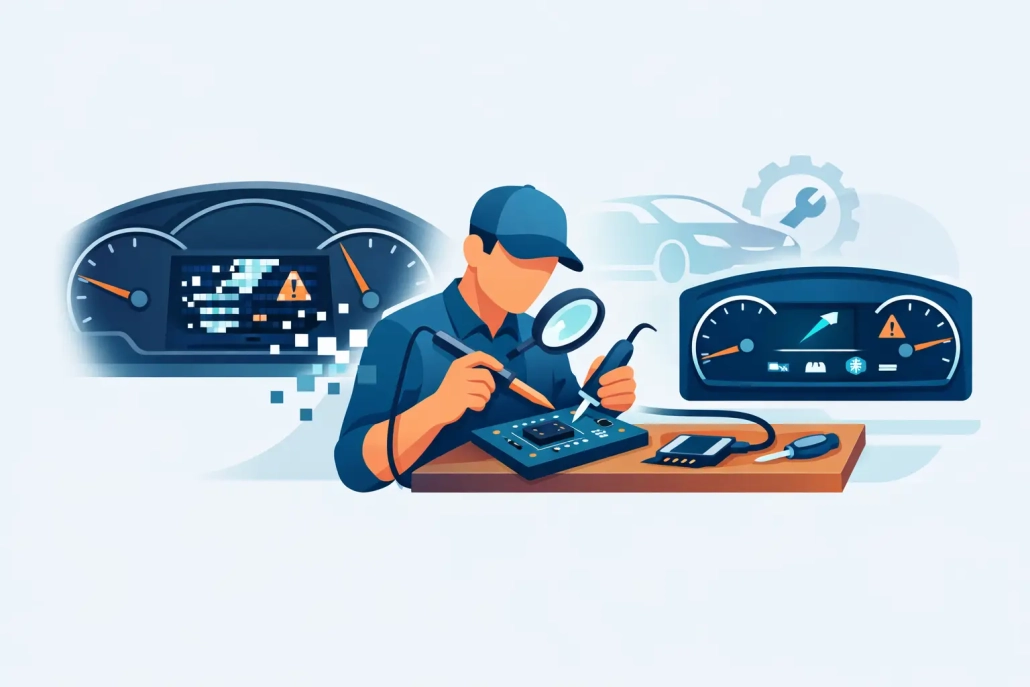
Dashboard Pixel Repair Service Explained
A fading information display can turn a simple journey into guesswork. When digits disappear from the odometer, warning messages are missing lines, or the outside temperature is unreadable, a dashboard pixel repair service can restore the display without replacing the entire instrument cluster.
For most vehicles, the dashboard is not just a collection of gauges. It stores mileage, communicates with other control units and may be coded to the car. Replacing it through a dealer can mean higher costs, programming work and avoidable delays. Repairing the original unit is often the more sensible route, provided the fault is correctly diagnosed.
What is a dashboard pixel repair service?
Pixel faults affect the LCD or display panel built into an instrument cluster, driver information centre or multi-function display. They usually begin as a few missing pixels or horizontal lines. Over time, sections of text, numbers or symbols can become difficult to read, particularly in cold weather or when the dashboard has warmed up.
A specialist repair addresses the failed display connection or component within the original cluster. The aim is to return a clear, stable display while retaining the unit fitted to the vehicle. That matters because the original mileage, coding and vehicle configuration remain in place.
This is different from fitting a used dashboard from another vehicle. A second-hand unit may have incompatible mileage, require coding, introduce further faults or simply fail in the same way shortly afterwards. It can look like a cheaper fix at first, but it often creates more work for the owner or garage.
Signs your instrument cluster needs attention
Missing pixels are the obvious sign, but display faults do not always look the same. Some drivers can still read the display during daylight but struggle at night. Others find that the screen works when cold, then fades after the car has been driven for a while.
Common symptoms include unreadable odometer figures, broken warning messages, missing characters on the trip computer, intermittent backlighting and dark patches across an LCD. On certain models, the display may be completely blank while the gauges continue to operate normally.
It is worth getting the fault checked before assuming the screen itself is the only issue. A low vehicle battery, charging problem, water ingress, poor connections or an internal circuit fault can also affect dashboard operation. If needles, warning lights and the display are all behaving unpredictably, the cluster may need a more comprehensive repair rather than a display-only repair.
Why repairing the original cluster makes sense
The main advantage is continuity. Your vehicle keeps its own instrument cluster, with the mileage and coding it already holds. There is no need to rely on a donor dashboard with an unknown history, and no unnecessary need to alter vehicle data.
Cost is another factor. Main dealer replacement commonly involves supplying a new cluster, fitting it, programming it and waiting for parts. For an older but otherwise dependable car, van or motorhome, that can be difficult to justify. A targeted repair deals with the failed part rather than replacing a complete electronic assembly.
There is also less disruption. Where the fault is suitable for repair, specialist testing and repair can often be completed on the same day or returned by the next working day. That is particularly useful for trade customers managing workshop space and for drivers who cannot leave a vehicle off the road for an extended period.
Repair is not always the right answer. Severe liquid damage, fire damage, extensive corrosion or previous poor repair work can affect what is possible. A proper assessment should be honest about the condition of the unit and whether a repair will provide a reliable result.
How dashboard pixel repair is carried out
The process starts with identifying the exact vehicle, cluster type and fault. Two dashboards from the same model range can use different display designs, so make, model, year and part details matter. Clear photographs of the display can help confirm the problem before the unit is sent or booked in.
Once received, the cluster is tested using specialist equipment and emulators where required. This allows the display, gauges, illumination and relevant functions to be checked outside the vehicle. It is a useful safeguard because it separates an internal cluster fault from a wiring or vehicle-side issue.
The unit is then carefully dismantled. The failed display connection, ribbon assembly or relevant internal component is repaired or replaced as appropriate. The work is precise: dashboard plastics, needles, screens and circuit boards are not parts to be handled roughly or repaired with a generic solution.
After repair, the cluster is tested again to confirm that the display is clear and stable. The objective is not merely to make a few pixels reappear on the bench. It is to ensure the unit is operating correctly before it goes back into the vehicle.
Postal repair or while-you-wait appointment?
A national postal dashboard pixel repair service is a practical option when travelling to a workshop is inconvenient. The cluster is removed from the vehicle, securely packaged and sent for repair. Once repaired and tested, it is returned ready for refitting. This suits owners across the UK as well as garages sending units in on behalf of customers.
A while-you-wait workshop appointment can be the better choice if you are local and want the vehicle assessed in person. It can also help where the fault is intermittent, because the technician can see the dashboard operating in the car before removal. Availability and repair time depend on the make, model and nature of the fault, so it is sensible to confirm the expected turnaround when booking.
For garages and dealerships, postal repair can reduce the pressure to source replacement clusters or send a customer away with an unresolved fault. The original unit is repaired and returned, allowing the workshop to complete the job without the complications of replacement coding where it is not needed.
What to check before booking a repair
Have the vehicle registration, make, model, year and a clear description of the display fault ready. If the cluster has already been removed, include the part number from the label where possible. This helps ensure the correct repair is identified from the start.
You should also mention any additional symptoms. A dim LCD on its own is different from a dim LCD combined with dead gauges, warning light issues or a no-communication fault. Giving the full picture avoids booking a pixel repair when the unit requires wider diagnostics.
Before sending a dashboard by post, remove it carefully and package it so it cannot move inside the box. Protect the front lens and connectors, and do not send loose screws or trim pieces unless specifically requested. A well-packaged cluster arrives in the same condition it left.
Ask what the quoted price includes, whether VAT is included and what warranty applies to the repair. A clear repair service should make those points straightforward. Cartronix provides transparent pricing, specialist testing and a lifetime warranty for as long as you own the vehicle, giving owners and trade customers reassurance that the repair is built to last.
Pixel repair versus a full instrument cluster repair
A pixel fault is often isolated to the display, but it is only one of several common dashboard problems. Speedometer failure, non-working fuel or temperature gauges, dim warning lights, failed illumination and total cluster failure need a different repair approach.
If the display is unreadable but the rest of the dashboard works correctly, a display repair is likely to the relevant service. If multiple gauges drop out, warning lights behave incorrectly or the cluster will not power up, the underlying fault may involve the circuit board, power supply or communications electronics.
This distinction matters for price and turnaround. A targeted pixel repair is generally more straightforward than a full cluster rebuild, but guessing can waste time. The best route is always to match the repair to the actual fault, not simply the most visible symptom.
A clear display is more than a cosmetic fix
Unreadable pixels can hide useful information, from service messages and warning alerts to mileage and fuel data. Restoring the display helps you use the vehicle as intended and can improve its presentation when it is time to sell.
More importantly, repairing the original dashboard avoids treating a specialist electronic fault as a reason to replace an entire unit. If your display is losing characters or fading from view, identify the cluster type, record the symptoms and arrange a proper assessment before the problem gets worse.




