
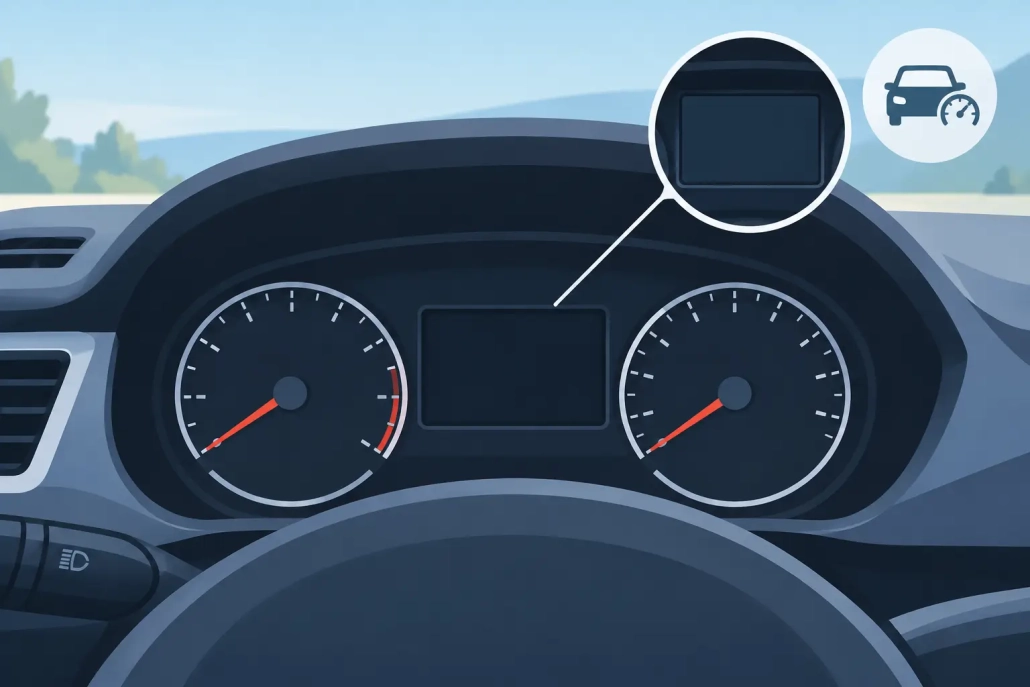
Why Is Odometer Display Blank? Common Causes
A blank odometer is more than an inconvenience when you are trying to check mileage, plan servicing or sell a vehicle. If you are asking, why is odometer display blank, the cause is often within the instrument cluster itself – not necessarily a lost mileage record or a failed engine system. The right repair depends on whether the rest of the dashboard is working, whether the screen is dim or completely dark, and whether the fault is permanent or intermittent.
On many vehicles, the mileage is retained electronically even when it cannot be shown on the display. That is good news, but it does not make the fault one to ignore. A failed odometer display can create problems at MOT time, make maintenance records harder to manage and leave warning messages unseen.
Why is the odometer display blank?
The most common reason is a fault in the instrument cluster’s display circuit. Modern dashboards use LCD, LED or vacuum fluorescent displays, along with small circuit-board components and connections that work under heat, vibration and electrical load every time the vehicle is driven. Over time, those components can fail.
A blank display does not always mean the complete cluster has failed. Your speedometer, rev counter, fuel gauge and warning lights may continue to operate normally while the mileage or information screen disappears. Equally, if the cluster is completely dead, the issue may involve its power supply, internal processor, vehicle communication or an external fuse and wiring fault.
The symptoms matter. A display that returns after the cabin warms up points to a different type of fault from one that has gone permanently black. A screen that is visible only in darkness may have a backlight fault, while missing digits, lines or patchy characters usually indicate LCD, ribbon connection or pixel failure.
The most likely causes
Failed LCD, pixel or backlight components
A display can remain powered but become unreadable. You may see faded numbers, vertical lines, missing sections of digits or a screen that is only visible from a certain angle. This is particularly common on ageing LCD displays and clusters exposed to frequent temperature changes.
Backlighting is another possibility. If the odometer can just be seen with a torch directed at the screen, the display itself may still be producing an image but its illumination has failed. Some clusters use replaceable bulbs; others use soldered LEDs or integrated display assemblies that need specialist repair.
Dry solder joints and internal circuit faults
Instrument clusters are subject to constant vibration, especially in vans, motorhomes and vehicles used on poor road surfaces. Over the years, solder joints can crack or weaken around display connectors, power regulators and processor circuits. The result can be an odometer that cuts in and out, works after a knock to the dashboard, or fails as the vehicle warms up.
This is not a reliable DIY repair. The cluster needs to be tested correctly, and poor soldering can damage delicate tracks or components. A proper repair identifies the underlying failure rather than simply reheating random joints and hoping the display returns.
Power, earth or fuse problems
Before assuming the cluster is at fault, basic vehicle checks are worthwhile. A blown fuse, poor earth, low battery voltage or disturbed connector can affect dashboard operation. This is more likely if several dashboard functions have stopped at once, the vehicle has recently had battery work, jump-starting or electrical repairs, or there are other cabin electrical faults.
However, a fuse problem normally affects more than just the odometer. If the gauges and warning lights are operating as expected but the mileage display alone is blank, an internal cluster display fault is usually more likely.
Water ingress or corrosion
Water can enter the dashboard area through blocked drains, windscreen leaks, heater matrix problems or previous accident damage. Corrosion on connectors and circuit boards may cause intermittent display faults at first, then a total failure.
Look for condensation inside the cluster lens, damp carpets, a musty smell or unexplained electrical behaviour. If water ingress is present, the source must be fixed as well as the dashboard. Repairing a cluster without stopping the leak risks repeating the fault.
Communication faults between vehicle modules
On some modern cars, mileage and driver information are shared between electronic modules. A communication fault can prevent the cluster from receiving information correctly or trigger warning messages alongside the blank display. These faults can be caused by wiring, a control module issue or a cluster fault.
Diagnostic fault codes can help, but they do not always provide a complete answer. A code may report a communication issue when the cluster’s own internal electronics are the reason it cannot communicate consistently. This is where specialist testing makes a difference.
What you can check safely first
Start with the simple observations. Switch the ignition on and note exactly what works: are the gauges responsive, do warning lights illuminate during the self-check, and is the screen totally black or merely faint? Try adjusting the dashboard dimmer if your vehicle has one. On certain models, an accidental dimmer setting can make the display appear failed.
Check the vehicle handbook for the relevant dashboard fuses, then inspect only where you are confident and can do so safely. A visual fuse check is not always enough, but replacing fuses repeatedly without finding the cause is not a fix. If a replacement fuse blows again, stop and have the circuit investigated.
It is also worth checking battery condition. Low voltage can create unusual dash behaviour, particularly after the vehicle has been standing. If the display remains blank once the battery and charging system are known to be healthy, attention should turn back to the cluster.
Avoid dismantling the instrument panel simply to inspect it. Trim clips, dashboard fascias and cluster connectors are easy to damage, and some vehicles require careful handling around airbag-equipped areas. More importantly, do not attempt mileage programming, substitute a used cluster or fit a second-hand unit without understanding the coding implications.
Can you drive with a blank odometer?
Whether it is safe depends on what else has failed. If only the mileage display is affected and the speedometer, warning lights and other essential gauges work correctly, the vehicle may still be driveable in the short term. Even then, book a repair promptly. You cannot reliably monitor mileage for servicing, and you may miss information displayed through the same screen.
If the speedometer, fuel gauge, temperature warning, brake warning light or multiple warning lights are also affected, do not treat it as a cosmetic fault. You may not have the information needed to operate the vehicle safely. A vehicle with a non-functioning speedometer should not be driven on public roads except where necessary to take it for repair or testing.
For MOT purposes, mileage is recorded where it can be displayed and read. A blank odometer can complicate the history and raise questions later when a buyer or garage compares recorded mileage figures. Keep invoices and records of any dashboard repair so there is a clear paper trail.
Repairing the original cluster versus replacing it
A main dealer may recommend a replacement instrument cluster. In some cases that is necessary, but it can be expensive and may involve ordering delays, coding, key or immobiliser synchronisation, and mileage alignment. A used cluster can introduce even more uncertainty because its stored data, specification and software may not match your vehicle.
Repairing the original unit is often the better route when the fault is confined to the display or cluster electronics. The vehicle keeps its original cluster, mileage and coding, avoiding unnecessary changes to the vehicle’s electronic identity. It also tends to be faster and more economical than dealer replacement.
A specialist repairer should test the cluster properly, not merely replace an LCD and return it unchecked. Emulated testing can confirm display operation, gauge movement, illumination and internal communication before the unit goes back into the vehicle. This matters because a blank odometer can have more than one contributing fault.
Cartronix repairs instrument clusters for a wide range of vehicles from 1996 onwards, including failed odometer displays, pixel faults, dim screens and complete dashboard failures. With postal repairs and while-you-wait appointments available, the aim is to get the original unit repaired and returned without dealer replacement costs. Repairs are backed by a lifetime warranty for as long as you own the vehicle.
When to arrange specialist diagnosis
Arrange diagnosis when the display remains blank after basic fuse, battery and dimmer checks, when it fails intermittently, or when other cluster functions are starting to behave unpredictably. Take note of the exact symptoms before the unit is removed: whether the fault appears cold or hot, whether it follows battery disconnection, and whether warning lights or gauges are affected. That information helps pinpoint the repair from the start.
A blank odometer does not automatically mean lost mileage or a costly new dashboard. In many cases, the original instrument cluster can be repaired accurately, preserving the information your vehicle already carries and getting you back to a clear, working display with minimal downtime.


